"Why Noah Webster's Way was the Right Way", Rogers, 2004
- learn the letters of the alphabet
- learn the 70 phonograms of the English language
- learn to spell with Webster's 1824 Speller
1. The Alphabet
Alphabet books are great for learning why we use letters and words - to represent real things. However, the goal is to have your child recognize the names of the letters without being associated with a particular picture. He should also know the cursive form of the each letter, and begin to write his letters.
An Alphabet of Saints, Benson, 1906
A Apple Pie, Greenaway
The Ark Alphabet, McLoughlin, 1868 (***omit back cover)C Is for Country: A Farmer's Alphabet, Hiebert, $6.05
2. The Phonograms
Stephen Kurkinen of EnglishStreams.com advocates the Webster method, providing a complete reading program called ABC Journey. He also has free instructional videos and free downloadable phonogram flashcards.
English Streams' ABC Journey, Stephen Kurkinen
70 Free Phonogram Flashcards Download
If you teach your child the Roundhand script that I recommend in the Home Education - Writing post, then you will have to make your own flash cards by hand, or use this downloadable computer font:
"Exmouth", DaFont.com - free download
Mr. Kurkinen has also created these helpful videos:
"How to Teach Vowels and Consonants"
“How to Teach All English Phonics Sounds”
3. The Speller
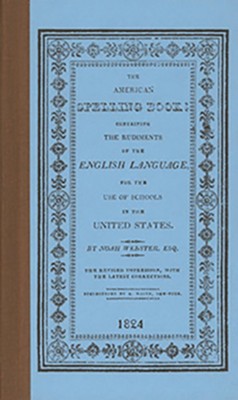
Reading specialist Don Potter has posted on his excellent website, http://www.donpotter.net/ an updated, printable version of Noah Webster's 1824 American Spelling Book:
Webster’s 1824 Speller - free
"Noah Webster Syllabary", Potter
American Spelling Book, Webster (Applewood Books) $12.99
A scanned copy of the 1822 edition of Webster's American Spelling Book can be found here:
American Spelling Book, Webster, 1822
~~~~~
EXTRA HELP
Webster’s Speller contains all the basic spelling rules. But Romalda Spalding’s The Writing Road to Reading also includes a helpful, concise list found here:
Spalding Spelling Rules 1-29 – free
The Writing Road to Reading, Spalding
"Reading Instruction and Research", Don Potter
- "Can Dyslexia Be Artificially Induced in School?" Miller
- "Miscue Analysis: Training Normal Children to Read Like Defective Children", Blumenfeld
- "Dyslexia, the Disease you Get in School", Blumenfeld
- "How to Cure Dyslexia", Blumenfeld
- "Why America Still has a Reading Problem", Blumenfeld
- "Effects of Pictures and Contextual Conditions on Learning to Read.", Samuel et al.
Once you have worked through the Webster Spelling book with your child, he is ready to begin the Reading Book List:
Home Education - Reading - Part 2...Coming soon!
JUST FOR FUN:
"School Days", Byron G. Harlan, 1907
No comments:
Post a Comment