Tuesday, October 31, 2023

Pope St. Gregory the Great Refuses the Title "Universal"

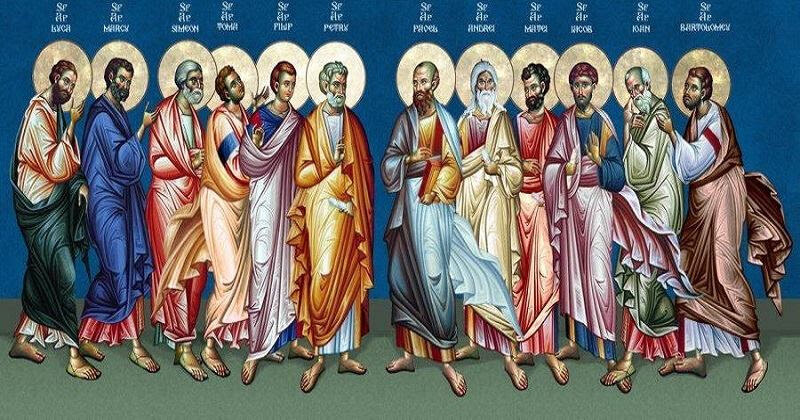
 + Holy Apostles Icon +
  leaving a space for Christ, the Head, in the center 

Patriarch John of Constantinople titled himself Universal Patriarch in a few letters he sent Pope St. Gregory the Great.  The Pope reproved John for using the title, not because he, Gregory, considered himself Universal Patriarch, but because Jesus Christ is Head of the Church.  Thus Pope St. Gregory teaches a primacy of rank and honor among the Patriarchal Sees, with Rome being first, but not papal supremacy: 

Pope St. Gregory the Great, Epistle 18: To John, Patriarch of Constantinople:   

...Certainly the apostle Paul, when he heard some say, I am of Paul, I of Apollos, but I of Christ (i Cor. i. 13), regarded with the utmost horror such dilaceration of the Lord's body, whereby they were joining themselves, as it were, to other heads, and exclaimed, saying, Was Paul crucified for you ? or were ye baptized in the name of Paul (ib.)? If then he shunned the subjecting of the members of Christ partially to certain heads, as if beside Christ, though this were to the apostles themselves, what wilt thou say to Christ, who is the Head of the universal Church, in the scrutiny of the last judgment, having attempted to put all his members under thyself by the appellation of Universal ? 

...Certainly Peter, the first of the apostles, himself a member of the holy and universal Church, Paul, Andrew, John, — what were they but heads of particular communities? And yet all were members under one Head. And (to bind all together in a short girth of speech) the saints before the law, the saints under the law, the saints under grace, all these making up the Lord's Body, were constituted as members of the Church, and not one of them has wished himself to be called universal. Now let your Holiness acknowledge to what extent you swell within yourself in desiring to be called by that name by which no one presumed to be called who was truly holy. 

Was it not the case, as your Fraternity knows, that the prelates of this Apostolic See [Rome], which by the providence of God I serve, had the honour offered them of being called universal by the venerable Council of Chalcedon? But yet not one of them has ever wished to be called by such a title, or seized upon this ill-advised name, lest if, in virtue of the rank of the pontificate, he took to himself the glory of singularity, he might seem to have denied it to all his brethren

...What, then, can we bishops say for ourselves, who have received a place of honour from the humility of our Redeemer, and yet imitate the pride of the enemy himself?

Throughout his epistle, St. Gregory warns Patriarch John against using the proud title of Universal Patriarch, out of a sincere concern for his soul. I ask, wasn't Pope Gregory obligated to speak the truth regarding 'papal supremacy' if it was a Catholic dogma?  Some contend that he was writing with humility, but if this is true, it would have been a false humility, which is really veiled pride. That cannot be the case.  Pope Gregory continues:

"...what wilt thou say to Christ, who is the Head of the universal Church, in the scrutiny of the last judgment, having attempted to put all his members under thyself by the appellation of Universal? Who, I ask, is proposed for imitation in this wrongful title but he who, despising the legions of angels constituted socially with himself, attempted to start up to an eminence of singularity, that he might seem to be under none and to be alone above all? Who even said, I will ascend into heaven, I will exalt my throne above the stars of heaven: I will sit upon the mount of the testament, in the sides of the North: I will ascend above the heights of the clouds; I will be like the most High (lsai. xiv. 13)."

Pope St. Gregory concludes, then, that whoever takes for himself the title Universal is imitating Lucifer!   By the 15th century, the antipopes began to use the title "Supreme Pontiff of the Universal Church".  Perhaps it is prophetic that, in another letter, the Saintly Pope has this to say about one who covets the title Universal: 

Book VII, Letter 33, Gregory to Mauricius Augustus
Now I confidently say that whosoever calls himself, or desires to be called, Universal Priest, is in his elation the precursor of Antichrist, because he proudly puts himself above all others. 

In response to such pride, Pope St. Gregory the Great adopted the title "Servant of the Servants of God".  Here is the Pope's letter to Patriarch John in its entirety:

Nicene and Post Nicene Fathers, Vol. 12, Book V, Schaff, p 166 
https://archive.org/details/selectlibraryofn12scha/page/166/mode/2up?view=theater 

EPISTLE XVIII. To John, Bishop. -- Gregory to John, Bishop of Constantinople 

At the time when your Fraternity was advanced to Sacerdotal dignity, you remember what peace and concord of the churches you found. But, with what daring or with what swelling of pride I know not, you have attempted to seize upon a new name, whereby the hearts of all your brethren might have come to take offence. I wonder exceedingly at this, since I remember how thou wouldest fain have fled from the episcopal office rather than attain it. And yet, now that thou hast got it, thou desirest so to exercise it as if thou hadst run to it with ambitious intent. For, having confessed thyself unworthy to be called a bishop, thou hast at length been brought to such a pass as, despising thy brethren, to covet to be named the only bishop. And indeed with regard to this matter, weighty letters were addressed to your Holiness by my predecessor Pelagius of holy memory; in which he annulled the acts of the synod, which had been assembled among you in the case of our once brother and fellow-bishop Gregory, because of that execrable title of pride, and forbade the archdeacon, whom he had sent according to custom to the threshold of our lord, to celebrate the solemnities of mass with you. But after his death, when I, unworthy, succeeded to the government of the Church, both through my other representatives and also through our common son the deacon Sabinianus, I have taken care to address your Fraternity, not indeed in writing, but by word of mouth, desiring you to restrain yourself from such presumption. And, in case of your refusing to amend, I forbade his celebrating the solemnities of mass with you; that so I might first appeal to your Holiness through a certain sense of shame, to the end that, if the execrable and profane assumption could not be corrected through shame, strict canonical measures might be then resorted to. And, since sores that are to be cut away should first be stroked with a gentle hand, I beg you, I beseech you, and with all the sweetness in my power demand of you, that your Fraternity gainsay all who flatter you and offer you this name of error, nor foolishly consent to be called by the proud title. For truly I say it weeping, and out of inmost sorrow of heart attribute it to my sins, that this my brother, who has been constituted in the grade of episcopacy for the very end of bringing back the souls of others to humility, has up to the present time been incapable of being brought back to humility ; that he who teaches truth to others has not consented to teach himself, even when I implore him.

Consider, I pray thee, that in this rash presumption the peace of the whole Church is disturbed, and that it is in contradiction to the grace that is poured out on all in common; in which grace doubtless thou thyself wilt have power to grow so far as thou determinest with thyself to do so. And thou wilt become by so much the greater as thou restrainest thyself from the usurpation of a proud and foolish title: and thou wilt make advance in proportion as thou art not bent on arrogation by derogation of thy brethren. Wherefore, dearest brother, with all thy heart love humility, through which the concord of all the brethren and the unity of the holy universal Church may be preserved. Certainly the apostle Paul, when he heard some say, I am of Paul, I of Apollos, but I of Christ (i Cor. i. 13), regarded with the utmost horror such dilaceration of the Lord's body, whereby they were joining themselves, as it were, to other heads, and exclaimed, saying, Was Paul crucified for you ? or were ye baptized in the name of Paul (ib.)? If then he shunned the subjecting of the members of Christ partially to certain heads, as if beside Christ, though this were to the apostles themselves, what wilt thou say to Christ, who is the Head of the universal Church, in the scrutiny of the last judgment, having attempted to put all his members under thyself by the appellation of Universal? Who, I ask, is proposed for imitation in this wrongful title but he who, despising the legions of angels constituted socially with himself, attempted to start up to an eminence of singularity, that he might seem to be under none and to be alone above all? Who even said, I will ascend into heaven, I will exalt my throne above the stars of heaven: I will sit upon the mount of the testament, in the sides of the North: I will ascend above the heights of the clouds; I will be like the most High (lsai. xiv. 13).

For what are all thy brethren, the bishops of the universal Church, but stars of heaven, whose life and discourse shine together amid the sins and errors of men, as if amid the shades of night? And when thou desirest to put thyself above them by this proud title, and to tread down their name in comparison with thine, what else dost thou say but I will ascend into heaven; I will exalt my throne above the stars of heaven? Are not all the bishops together clouds, who both rain in the words of preaching, and glitter in the light of good works? And when your Fraternity despises them, and you would fain press them down under yourself, what else say you but what is said by the ancient foe, I will ascend above the heights of the clouds? All these things when I behold with tears, and tremble at the hidden judgments of God, my fears are increased, and my heart cannot contain its groans, for that this most holy man the lord John, of so great abstinence and humility, has, through the seduction of familiar tongues, broken out into such a pitch of pride as to attempt, in his coveting of that wrongful name, to be like him who, while proudly wishing to be like God, lost even the grace of the likeness granted him, and because he sought false glory, thereby forfeited true blessedness. Certainly Peter, the first of the apostles, himself a member of the holy and universal Church, Paul, Andrew, John, — what were they but heads of particular communities? And yet all were members under one Head. And (to bind all together in a short girth of speech) the saints before the law, the saints under the law, the saints under grace, all these making up the Lord's Body, were constituted as members of the Church, and not one of them has wished himself to be called universal. Now let your Holiness acknowledge to what extent you swell within yourself in desiring to be called by that name by which no one presumed to be called who was truly holy.

Was it not the case, as your Fraternity knows, that the prelates of this Apostolic See, which by the providence of God I serve, had the honour offered them of being called universal by the venerable Council of Chalcedon? But yet not one of them has ever wished to be called by such a title, or seized upon this ill-advised name, lest if, in virtue of the rank of the pontificate, he took to himself the glory of singularity, he might seem to have denied it to all his brethren.

But I know that all arises from those who serve your Holiness on terms of deceitful familiarity; against whom I beseech your Fraternity to be prudently on your guard, and not to lay yourself open to be deceived by their words. For they are to be accounted the greater enemies the more they flatter you with praises. Forsake such; and, if they must needs deceive, let them at any rate deceive the hearts of worldly men, and not of priests. Let the dead bury their dead (Luke ix. 60). But say ye with the prophet, Let them be turned back and put to shame that say unto me, Aha, Aha (Ps. lxix. 4). And again, But let not the oil of the sinner lard my head (Ps. cxl. 5).

Whence also the wise man admonishes well, Be in peace with many: but have but one counsellor of a thousand (Ecclus. vi. 6). For Evil communications corrupt good manners ( 1 Cor. xv. 33). For the ancient foe, when unable to break into strong hearts, looks out for weak persons who are associated with them, and, as it were, scales lofty walls by ladders set against them. So he deceived Adam through the woman who was associated with him. So, when he slew the sons of the blessed Job, he left the weak woman, that, being unable of himself to penetrate his heart, he might at any rate be able to do so through the woman's words. Whatever weak and secular persons, then, are near you, let them be shattered in their own persuasive words and flattery, since they procure to themselves the eternal enmity of God from their very frowardness in being seeming lovers.

Of a truth it was proclaimed of old through the Apostle John, Little children, it is the last hour (1 John ii. 18), according as the Truth foretold. And now pestilence and sword rage through the world, nations rise against nations, the globe of the earth is shaken, the gaping earth with its inhabitants is dissolved. For all that was foretold is come to pass. The king of pride is near, and (awful to be said!) there is an army of priests in course of preparation for him, inasmuch as they who had been appointed to be leaders in humility enlist themselves under the neck of pride. But in this matter, even though our tongue protested not at all, the power of Him who in His own person peculiarly opposes the vice of pride is lifted up for vengeance against elation. For hence it is written, God resisteth the proud, but giveth grace unto the humble (Jam. iv. 6). Hence, again, it is said, Whoso exalteth his heart is unclean before God (Prov. xvi. 5). Hence, against the man that is proud it is written, Why is earth and ashes proud (Ecclus. x. 9)? Hence the Truth in person says, Whosoever exalteth himself shall be abased (Luke xiv. n). And, that he might bring us back to the way of life through humility, He deigned to exhibit in Himself what He teaches us, saying, Learn of me; for I am meek and lowly in heart (Matth. xi. 29). For to this end the only begotten Son of God took upon Himself the form of our weakness; to this end the Invisible appeared not only as visible but even as despised; to this end He endured the mocks of contumely, the reproaches of derision, the torments of suffering; that God in His humility might teach man not to be proud. How great, then, is the virtue of humility for the sake of teaching which alone He who is great beyond compare became little even unto the suffering of death! For, since the pride of the devil was the origin of our perdition, the humility of God has been found the means of our redemption. That is to say, our enemy, having been created among all things, desired to appear exalted above all things; but our Redeemer remaining great above all things, deigned to become little among all things.

What, then, can we bishops say for ourselves, who have received a place of honour from the humility of our Redeemer, and yet imitate the pride of the enemy himself? Lo, we know our Creator to have descended from the summit of His loftiness that He might give glory to the human race, and we, created of the lowest, glory in the lessening of our brethren. God humbled Himself even to our dust; and human dust sets his face as high as heaven, and with his tongue passes above the earth, and blushes not, neither is afraid to be lifted up; even man who is rottenness, and the son of man that is a worm.

Let us recall to mind, most dear brother, this which is said by the most wise Solomon, Before thunder shall go lightning, and before ruin shall the heart be exalted (Ecclus. xxxii. 10); where, on the other hand it is subjoined, Before glory it shall be humbled. Let us then be humbled in mind, if we are striving to attain to real loftiness. By no means let the eyes of our heart be darkened by the smoke of elation, which the more it rises the more rapidly vanishes away. Let us consider how we are admonished by the precepts of our Redeemer, who says, Blessed are the poor in spirit ; for theirs is the kingdom of heaven (Matth. v. 3). Hence, also, he says by the prophet, On whom shall my Spirit rest, but on him that is humble, and quiet, and that trembleth at my words (Isai. lxvi. 2)? Of a truth, when the Lord would bring back the hearts of His disciples, still beset with infirmity, to the way of humility, He said, Whosoever will be chief among you shall be least of all (Matth. xx. 27).

Whereby it is plainly seen how he is truly exalted on high who in his thoughts is humbled. Let us, therefore, fear to be numbered among those who seek the first seats in the synagogues, and greetings in the market, and to be called of men Rabbi. For, contrariwise, the Lord says to His disciples, But be not ye called Rabbi : for one is your master; and all ye are brethren. And call no man your Father upon the earth, for one is your Father (Matth. xxiii. 7, 8).

What then, dearest brother, wilt thou say in that terrible scrutiny of the coming judgment, if thou covetest to be called in the world not only father, but even general father? Let, then, the bad suggestion of evil men be guarded against ; let all instigation to offence be fled from. It must needs be {indeed) that offences come ; nevertheless, woe to that man by whom the offence cometh (Matth. xviii. 7). Lo, by reason of this execrable title of pride the Church is rent asunder, the hearts of all the brethren are provoked to offence. What ! Has it escaped your memory how the Truth says, Whoso shall offend one of these little ones which believe in me, it were better for him that a mill stone were hanged about his neck, and thai he were drowned in the depth of the sea (lb. v. 6) ? But it is written, Charity seeketh not her own (1 Cor. xiii. 4). Lo, your Fraternity arrogates to itself even what is not its own. Again it is written, /;/ honour preferring one another (Rom. xii. 10). And thou attemptest to take the honour away from all which thou desirest unlawfully to usurp to thyself singularly. Where, dearest brother, is that which is written, Have peace with all men, and holiness, without which no man shall see the Lord (Heb. xii. 14)? Where is that which is written, Blessed are the peacemakers ; for they shall be called the children of God (Matth. v. 9)?

It becomes you to consider, lest any root of bitterness springing up trouble you, and thereby many be defiled. But still, though we neglect to consider, supernal judgment will be on the watch against the swelling of so great elation. And we indeed, against whom such and so great a fault is committed by this nefarious attempt, — we, I say, are observing what the Truth enjoins when it says, If thy brother shall sin against thee, go and tell him his fault between thee and him alone. If he shall hear thee, thou hast gained thy brother. But if he will not hear thee, take with thee one or two more, that in the mouth of one or two witnesses every word may be established. But if he will not hear them, tell it unto the Church. But if he will not hear the Church, let him be to thee as an heathen man and a publican (Matth. xviii. 15). I therefore have once and again through my representatives taken care to reprove in humble words this sin against the whole Church ; and now I write myself. Whatever it was my duty to do in the way of humility I have not omitted. But, if I am despised in my reproof, it remains that I must have recourse to the Church.

Wherefore may Almighty God show your Fraternity how great love for you constrains me when I thus speak, and how much I grieve in this case, not against you, but for you. But the case is such that in it I must prefer the precepts of the Gospel, the ordinances of the Canons, and the welfare of the brethren, to the person even of him whom I greatly love.

I have received the most sweet and pleasant letter of your Holiness with respect to the case of the presbyters John and Athanasius 6, about which, the Lord helping me, I will reply to you in another letter ; for, being surrounded by the swords of barbarians, I am now oppressed by such great tribulations that it is not allowed me, I will not say to treat of many things, but hardly even to breathe. Given in the Kalends of January ; Indiction 13.
Sunday, October 22, 2023

Home Education - Reading - Part 1

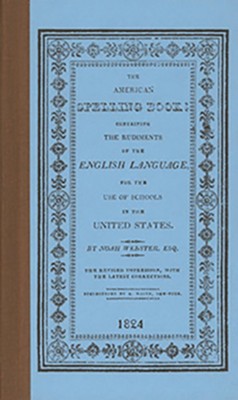
The American Spelling Book 
Noah Webster, 1824


PART 1: LEARNING TO READ

What is the best way to learn how to read?  The older, successful way relied on the syllabic method, using a "Speller" to teach children how to spell.  They first learned how to spell all words, so that they could then learn to read and write.  Students learned how to spell and pronounce words, even if they did not fully understand their meaning.  Noah Webster wrote his first spelling book in 1789, at age 25.  He largely standardized the American English written language.  By the 19th century, the sale of Webster's "Blue-Backed Speller" in America was second only to the Bible.  But toward the middle of the 19th century, in spite of America's high literacy rate, education reformers began the push to flip-flop this process, attempting to teach young children reading first, using whole-word recognition, and years of spelling lists and grammar.  An essay by retired teacher Geraldine Rogers, summarizes why Noah Webster's American Speller was so effective:

"Why Noah Webster's Way was the Right Way", Rogers, 2004 

Most modern phonics reading programs are still built on the ineffective word meaning method, introducing bits of phonics gradually, working only with words the child easily understands, rather than the spelling method.  This long process that relies on 100% teacher interaction, as phonics and spelling are spoon-fed to children over the course of six or eight years, is, in my opinion an orchestrated plan for reduced literacy.

“Spelling is the foundation of reading and the greatest
ornament of writing.”  --- Noah Webster, 1783

Did you ever wonder why there were so few "children's" books in colonial days?  Children seemed to miraculously transition from the New England Primer, or Webster's "Blue-Backed" Speller, to reading the bible!  This is because they were taught how to spell thoroughly, before they began to read.

My recommendations for learning to read are:
  1. learn the letters of the alphabet
  2. learn the 70 phonograms of the English language
  3. learn to spell with Webster's 1824 Speller


1. The Alphabet

Alphabet books are great for learning why we use letters and words - to represent real things.  However, the goal is to have your child recognize the names of the letters without being associated with a particular picture.  He should also know the cursive form of the each letter, and begin to write his letters.

An Alphabet of Saints, Benson, 1906 
 
The Ark Alphabet, McLoughlin, 1868 (***omit back cover)

C Is for Country: A Farmer's Alphabet, Hiebert, $6.05

2. The Phonograms

Stephen Kurkinen of EnglishStreams.com advocates the Webster method, providing a complete reading program called ABC Journey.  He also has free instructional videos and free downloadable phonogram flashcards. 

English Streams' ABC Journey, Stephen Kurkinen
 
70 Free Phonogram Flashcards Download

If you teach your child the Roundhand script that I recommend in the Home Education - Writing post, then you will have to make your own flash cards by hand, or use this downloadable computer font:

"Exmouth", DaFont.com - free download

Mr. Kurkinen has also created these helpful videos: 

"How to Teach Vowels and Consonants"
 
“How to Teach All English Phonics Sounds”


3. The Speller

Reading specialist Don Potter has posted on his excellent website,  http://www.donpotter.net/ an updated, printable version of Noah Webster's 1824 American Spelling Book:

Webster’s 1824 Speller - free

Mr. Potter also has a helpful instructional video on how to implement Webster's Speller:

"Noah Webster Syllabary", Potter

Mr. Potter points out that, after 1829, the Webster Spellers gradually began to change, acquiescing to the demand for the new (less effective) educational models.  If you would like to purchase a reprint of Webster's 1824 American Spelling Book in its original format, it's available here:

American Spelling Book, Webster (Applewood Books) $12.99

A scanned copy of the 1822 edition of Webster's American Spelling Book can be found here:

American Spelling Book, Webster, 1822


~~~~~

EXTRA HELP

Webster’s Speller contains all the basic spelling rules.  But Romalda Spalding’s The Writing Road to Reading also includes a helpful, concise list found here:

Spalding Spelling Rules 1-29 – free

If even more help is needed, Spalding's The Writing Road to Reading provides an even greater kinesthetic approach:
The Writing Road to Reading, Spalding
Several excellent article links about overcoming reading difficulties can be found on Don Potter's web-page:

"Reading Instruction and Research", Don Potter
  • "Can Dyslexia Be Artificially Induced in School?" Miller
  • "Miscue Analysis: Training Normal Children to Read Like Defective Children", Blumenfeld
  • "Dyslexia, the Disease you Get in School", Blumenfeld
  • "How to Cure Dyslexia", Blumenfeld
  • "Why America Still has a Reading Problem", Blumenfeld
  • "Effects of Pictures and Contextual Conditions on Learning to Read.", Samuel et al. 

~~~

Once you have worked through the Webster Spelling book with your child, he is ready to begin the Reading Book List:

Home Education - Reading - Part 2...Coming soon!


JUST FOR FUN:

"School Days", Byron G. Harlan, 1907


Saturday, October 7, 2023

Vatican I Refutes "Traditional" Roman Catholicism


The general premise and conclusion of this post is taken from the book  The Sedevacantist Delusion - Why Vatican II's Clash with Sedevacantism Supports Eastern Orthodoxy, by John C. Pontrello. 

Traditional Roman Catholicism includes those varying factions that reject Vatican Council II (1962-1965) and the teachings of every Pope from John XXIII to Francis I.  The largest groups center around the priestly societies known as SSPX, CMRI, SSPV, and so-called Independents.  These groups vary on whether or not the aforementioned "modernist" popes were true popes, whether or not one must declare them to be antipopes, holding the "sede vacante" (vacant See) position, and whether or not the New Order sacraments instituted by Paul VI are valid.   They differ on which of their break-away bishops are valid, and therefore impart valid sacraments.  A few fringe groups have even elected their own popes.  But the one thing these groups have in common is that they claim to uphold pre-Vatican Council II Roman Catholicism.

This post mainly addresses that majority of Traditional Roman Catholics (Trads) who accept Pius XII as the last valid pope to date, along with all his teachings, and those of his predecessors.  But it also speaks to that handful of Roman Catholic Recusants who believe there have been antipopes for a few or even several centuries.  

Trads accept the First Vatican Council, and the 1917 Code of Canon Law.  They also accept the established Eastern Rites of the Roman Catholic church, holding their sacraments, priesthood and liturgies as valid.

Trads justify their rejection of Rome by claiming the church is in a sede vacante state - the state in which Roman Catholicism finds itself when one pope dies and the next has not yet been elected.  The Roman See is not merely vacant, however.  It is not in an extended inter-regnum because all the cardinals and magisterium of Rome have also fallen away along with the pope, and there is no way to re-elect a valid pope!  According to Roman Catholicism, even if an individual pope should turn out to be an antipope, the Roman Cardinals always retain the ability to elect a valid pope: 

1917 Code of Canon Law 

Canon 160  The election of the Roman Pontiff is guided solely by the const. of Pius X Vacante Sede Apostolica of 25 Dec. 1904: 

27. The right to elect the Roman Pontiff belongs exclusively and privately to the Cardinals, to the exclusion of all... 

Canon 233 § 1. Cardinals are created and published by the Roman Pontiff in a Consistory, and those so created and published obtain the right of electing the Roman Pontiff... 

The correct term for the state of the Roman See, according to Catholic theology, is sede impedite, or impeded see, for the all the Offices have been overtaken by modernist heretics and apostates.  This is the public stance of my former group, the Society of St. Pius V (SSPV): 

SSPV, “A Statement of Principles in a Time of Crisis” 

1. The changes following the Second Vatican Council have proven so damaging to the Roman Catholic Religion and so detrimental to the sanctification of souls... This Council marked the culmination of the first phase of a liberal and modernist intrusion into the Roman Catholic Church... 

3. These intruders have attempted to promulgate, in the name of the Roman Catholic Church, abominable novelties in every aspect of her life, i.e., in the areas of doctrine, morals, liturgy, canon law, pastoral practices, seminary education and religious life. 

4. The intrusion of the liberals and modernists into positions of control has caused the wide-spread destruction of Catholic Faith, morals and worship and the creation of a new religion –  the so-called conciliar religion which is not the Catholic Religion. 

7. To exercise authority over the Church one must externally be a member of the Church. To be a member of the Church one must profess the Catholic Faith. Public abandonment of the Faith severs one from the Church and causes one to lose any position of authority one may have had.  For this reason, theologians of all time have held and taught, and Canon Law confirms in Canon 1325, no. 2, that anyone who publicly and notoriously defects from the Faith by obstinately denying or doubting any article of Divine and Catholic Faith is a heretic. It is evident that such a person could not possibly rule the faithful... 

The problem with this position is that it is contrary to the dogmatic teaching of the First Vatican Council (1870), which they hold as infallible.  The belief that the Roman See can apostatize at all is a heresy according to Vatican Council I, Leo XIII’s encyclical Satis Cognitum, and Pius XII’s encyclical Mystici Corporis regarding the Roman See’s permanency, necessity, visibility, infallibility and indefectibility.  Roman Catholics are not permitted to believe Christ would allow the Roman See to apostatize: 

First Vatican Council, 1870 https://www.papalencyclicals.net/councils/ecum20.htm 

Session 4, Opening Statements 

3...it was His will that in His church there should be shepherds and teachers until the end of time

4. In order, then, that the episcopal office should be one and undivided and...the whole multitude of believers should be held together in the unity of faith and communion, He set blessed Peter over the rest of the apostles and instituted in him the permanent principle of both unities and their visible foundation

5. Upon the strength of this foundation was to be built the eternal temple... 

6. And since the gates of hell trying, if they can, to overthrow the church, make their assault with a hatred that increases day by day against its divinely laid foundation, we judge it necessary, with the approbation of the sacred council, and for the protection, defense and growth of the catholic flock, to propound the doctrine concerning the institution, permanence and nature of the sacred and apostolic primacy upon which the strength and coherence of the whole church depends

7. This doctrine is to be believed and held by all the faithful in accordance with the ancient and unchanging faith of the whole church. 

Here is the dogmatic teaching on the PERMANENCY of the Roman See:

First Vatican Council, Session 4, Ch. 2. On the permanence of the primacy of blessed Peter in the Roman pontiffs 

1. That which our lord Jesus Christ, the prince of shepherds and great shepherd of the sheep, established in the blessed apostle Peter, for the continual salvation and permanent benefit of the church, must of necessity remain forever, by Christ’s authority, in the church which, founded as it is upon a rock, will stand firm until the end of time

2. For...blessed Peter, prince and head of the apostles, the pillar of faith and the foundation of the catholic church...to this day and forever he lives and presides and exercises judgment in his successors the bishops of the holy Roman see...

3. Therefore whoever succeeds to the chair of Peter obtains by the institution of Christ himself, the primacy of Peter over the whole church. So what the truth has ordained stands firm, and blessed Peter perseveres in the rock-like strength he was granted, and does not abandon that guidance of the church which he once received

5...if anyone says that it is not by the institution of Christ the Lord Himself (that is to say, by divine law) that blessed Peter should have perpetual successors in the primacy over the whole church; or that the Roman pontiff is not the successor of blessed Peter in this primacy:  let him be anathema

Here are the decrees on the Roman See's PERPETUAL INFALLIBILITY: 

First Vatican Council, Session 4, Ch. 4. On the infallible teaching authority of the Roman pontiff 

6...this See of St. Peter always remains unblemished by any error, in accordance with the divine promise of our Lord and Saviour to the prince of his disciples:  “I have prayed for you that your faith may not fail; and when you have turned again, strengthen your brethren.” 

7. This gift of truth and never-failing faith was therefore divinely conferred on Peter and his successors in this see so that they might discharge their exalted office for the salvation of all, and so that the whole flock of Christ might be kept away by them from the poisonous food of error and be nourished with the sustenance of heavenly doctrine. Thus the tendency to schism is removed and the whole church is preserved in unity, and, resting on its foundation, can stand firm against the gates of hell

According to Leo XIII (whose teaching infallibly interprets the dogmas of Vatican I according to Roman Catholicism), the Church is always visible in the person of the Roman Pontiff, the Pope, so that each man in the world can know what Church to join in order to save his soul:

Leo XIII, Satis Cognitum, 1896 

The Church Always Visible 

3.  And, since it was necessary that His divine mission should be perpetuated to the end of time... the Church was begotten...it is external and necessarily visible.  

Every Revealed Truth, without Exception, Must be Accepted 

9...Christ instituted in the Church a living, authoritative and permanent Magisterium, which by His own power He strengthened...He willed and ordered, under the gravest penalties, that its teachings should be received as if they were His own...If it could in any way be false, an evident contradiction follows; for then God Himself would be the author of error in man... 

...For this reason the Fathers of the Vatican Council laid down nothing new...when they decreed as follows: "All those things are to be believed by divine and Catholic faith which are contained in the written or unwritten word of God, and which are proposed by the Church as divinely revealed, either by a solemn definition or in the exercise of its ordinary and universal Magisterium" (Sess. iii., cap. 3).  

Hence, as it is clear that God absolutely willed that there should be unity in His Church, and as it is evident what kind of unity He willed, and by means of what principle He ordained that this unity should be maintained... that Church, which, as is evident to all, possesses the supreme authority of the Apostolic See... 

...It is then undoubtedly the office of the church to guard Christian doctrine...since Jesus Christ...ordered the Church to strive, by the truth of its doctrine, to sanctify and to save mankind. But faith alone cannot compass so great, excellent, and important an end.  There must needs be also the fitting and devout worship of God, which is to be found chiefly in the divine Sacrifice and in the dispensation of the Sacraments, as well as salutary laws and discipline. All these must be found in the Church, since it continues the mission of the Saviour forever... 

The Church is a Divine Society 

10  ..the Church is a society divine in its origin, supernatural in its end and in means proximately adapted to the attainment of that end...it is called the kingdom which God has raised up and which will stand forever. Finally it is the body of Christ - that is, of course, His mystical body, but a body living and duly organized and composed of many members; members indeed which have not all the same functions, but which, united one to the other, are kept bound together by the guidance and authority of the head

...inasmuch as the Church is a divinely constituted society, unity of government, which effects and involves unity of communion, is necessary jure divino. "The unity of the Church is manifested in the mutual connection or communication of its members, and likewise in the relation of all the members of the Church to one head."  

The Supreme Authority Founded by Christ 

11. The nature of this supreme authority, which all Christians are bound to obey, can be ascertained only by finding out what was the evident and positive will of Christ...since [Christ] willed that His kingdom should be visible...because He was about to withdraw His visible presence from the Church, it was necessary that He should appoint someone in His place, to have the charge of the Universal Church. Hence before His Ascension He said to Peter: 'Feed my sheep' ". 

Jesus Christ, therefore, appointed Peter to be that head of the Church; and He also determined that the authority instituted in perpetuity for the salvation of all should be inherited by His successors, in whom the same permanent authority of Peter himself should continue... 

Trads claim the Church can "get along without the Pope".  Leo XIII's encyclical also points out the NECESSITY OF THE ROMAN SEE, however:

Leo XIII, Satis Cognitum, 1896 

The Universal Jurisdiction of St. Peter 

12. From this text it is clear that by the will and command of God the Church rests upon St. Peter, just as a building rests on its foundation. Now the proper nature of a foundation is to be a principle of cohesion for the various parts of the building. It must be the necessary condition of stability and strength. Remove it and the whole building falls. It is consequently the office of St. Peter to support the Church, and to guard it in all its strength and indestructible unity

The Roman Pontiffs Possess Supreme Power in the Church Jure Divino 

13. It was necessary that a government of this kind, since it belongs to the constitution and formation of the Church, as its principal element - that is as the principle of unity and the foundation of lasting stability - should in no wise come to an end with St. Peter, but should pass to his successors from one to another... 

According to Roman Catholicism, one pope dies and another is elected, so there is a short gap, an inter regnum that does not negate the perpetuity of the Office of Peter.  But there could, according to Vatican I and Leo XIII, never be a time when the Church looses the means to elect the next pope!  Yet, the entire Roman See has, according to Trads, fallen away into heresy and apostasy.  

Trads are faced with the dilemma of either accepting the heresies and apostasies of the post-Vatican II hierarchy, or tacitly believing the Popes and entire Roman See have fallen away from the faith, not being the divinely established permanent principle of unity and source of truth.  But, as we have seen above, this is also a heretical position, according to Vatican I. 

So what do Trad bishops do?  In their new theology, they substitute "the Pope" with "the Mystical Body of Christ":  

SSPV, “A Statement of Principles in a Time of Crisis” 

4. ...those who promote the doctrines and reforms of the conciliar religion do not represent the Roman Catholic Church, which is absolutely and exclusively identified with the Mystical Body of Christ and which is known by its four marks. 

5. The Catholic Church was established by Our Lord Jesus Christ for the purpose of teaching, ruling and sanctifying the faithful in His name. 

Oops!  It is, of course, true that "the Church was established to teach, rule and sanctify". But in the wake of Vatican I, this statement is heretical since, as justification for the SSPV's existence, it implies that the current Roman See does not teach, rule or sanctify:  

Vatican I, Session 4, Opening Statements 

4. In order, then, that...the whole multitude of believers should be held together in the unity of faith and communion, He set blessed Peter over the rest of the apostles and instituted in him the permanent principle of both unities and their visible foundation. 

I guess the SSPV is counting on people being content with their "sacraments" and conservative façade, never questioning their incoherency.  But this is true for all the so-called traditional Roman Catholic bishops and priestly societies.

Oops!  The SSPV also states "the Church is exclusively identified with the Body"?  

First, this statement is illogical, for it says the church is identified with the church. Not only is it contrary to Vatican I and Leo XIII above, it's also contrary to Pius XII's Mystici Corporis.  Pius XII specified what "the Mystical Body of Christ" consists of and how it is identified.  He states that Christ never ceases to guide His Church through Peter’s Successors, and therefore “the Mystical Body” has a visible Head BY NECCESSITY: 

Pius XII, Mystici Corporis, 1943 

39...from Heaven Christ never ceases to look down with especial love on His spotless Spouse so sorely tried in her earthly exile; and when He sees her in danger, saves her from the tempestuous sea either Himself or through the ministry of His angels, or through her whom we invoke as Help of Christians, or through other heavenly advocates, and in calm and tranquil waters comforts her with the peace "which surpasseth all understanding." 

40. But we must not think that He rules only in a hidden or extraordinary manner. On the contrary, our Redeemer also governs His Mystical Body in a visible and normal way through His Vicar on earth...Christ our Lord...entrusted to the Chief of the Apostles the visible government of the entire community He had founded. Since He was all wise He could not leave the body of the Church He had founded as a human society without a visible head...Christ, who never ceases Himself to guide the Church invisibly, though at the same time He rules it visibly, through him who is His representative on earth. After His glorious Ascension into Heaven this Church rested not on Him alone, but on Peter, too, its visible foundation stone... 

41. They, therefore, walk in the path of dangerous error who believe that they can accept Christ as the Head of the Church, while not adhering loyally to His Vicar on earth. They have taken away the visible head, broken the visible bonds of unity and left the Mystical Body of the Redeemer so obscured and so maimed, that those who are seeking the haven of eternal salvation can neither see it nor find it

50...It is [Christ] who...enriches...above all His Vicar on earth with the supernatural gifts of knowledge, understanding and wisdom, so that they may loyally preserve the treasury of faith, defend it vigorously, and explain it and confirm it with reverence and devotion. Finally, it is [Christ] who, though unseen, presides at the Councils of the Church and guides them.  

52...our Savior Himself sustains in a divine manner the society which He founded

53...He so sustains the Church, and so in a certain sense lives in the Church, that she is, as it were, another Christ. 

64...so is it with His Mystical Body...that He might consecrate in His blood the visible Society founded by Him and "lead man back to things invisible under a visible rule." 

65. ...those who dream of an imaginary Church...fail to understand that the reason which led our Divine Redeemer to give to the community of man He founded the constitution of a Society, perfect of its kind and containing all the juridical and social elements - namely, that He might perpetuate on earth the saving work of Redemption... 

69. Now since its Founder willed this social body of Christ to be visible...Above all, it is ABSOLUTELY NECESSARY that the Supreme Head, that is, the Vicar of Jesus Christ on earth, be visible to the eyes of all, since it is He who...commissioned Peter and his successors to be His personal representatives on earth and to assume the visible government of the Christian community. 

The claim that "modernists have overtaken the Church", is completely heretical, since it makes Christ incapable of, or negligent in, protecting and guiding His Church.  The Recusant claim is just as bad, for it says Christ abandoned His Church as a punishment for man's wickedness.   But Christ promised to be with His bishops until the end of time:

Matt. 28:20  ...behold I am with you [Apostles] all days, even to the consummation of the world.

Therefore, Christ's Church is where faithful Bishops are.  The  Traditional Roman Catholic position untenable because all Trad bishops accept Vatican Council I.  One must conclude, then, that the Roman Catholic model is not from Christ or His Apostles.  So who is left?  Old Catholics, Protestants  and the Eastern Orthodox.  

Both Old Catholics and Protestants are also faced with a dilemma, since their Orders stem from Roman Catholic Bishops who have accepted the papal monarchical system (the tenets of Vatican I) ever since the time of Antipope Gregory VII.  If the previous Bishops were not heretical, then there is no justification in separating from them.  If they were heretical, then there has been a break in apostolic succession, for centuries, which could only be healed by entering into communion with faithful, apostolic bishops.

Only the Orthodox Church can justly maintain that it is the one Church Christ founded.  By acknowledging that the Roman See has apostatized from the Faith, Trads tacitly admit the Orthodox position:  that the Roman See is fully capable of falling away from the Faith, and that it has fallen away.  The Church Christ founded is known by its four marks:  one, holy, catholic and apostolic.  The true Church is indefectible because Jesus Christ is its Head, and because it is guided by the Holy Spirit, especially through Councils.  It is visible, not only in the valid successors of St. Peter, but in all faithful Bishops.   Only the Orthodox Church is one, having one apostolic faith and creed from the beginning, as well as the same conciliar model of government (Apostolic Canon 34).  It is holy, retaining the same Sacraments, Liturgies and keeping the canons and customs faithfully.  It alone is catholic, for the same has been believed and practiced  everywhere by all at all times.  Finally, only the Orthodox Bishops have true apostolic succession, which includes Christ's mission to teach, govern and sanctify.  Apostolic succession is lost through schism, heresy and apostasy.  The Roman See did, indeed, apostatize, but not with Vatican Council II.  It fell away in the 11th century, just as the Orthodox have always proclaimed to the world.  The Orthodox Church is Christ's spotless Bride (even today during the Great Apostasy of Ecumenism).  Roman Catholics, Trads and Recusants have just been too blind to see it.