Thursday, June 19, 2025

Synodal Epistle of the GOC to the ROCOR Synod, 1976

To the Hierarchy
of the RUSSIAN ORTHODOX CHURCH OUTSIDE OF RUSSIA,
75, East 93rd Street,
New York 28
N.Y. U.S.A.

Most Right Reverend President MM Philaretos
Right Reverend Prelates, may Christ be with us.

1. In the year 1971 our Synodical Exarchate consisting of their Right Reverences the Bishops of Corinthia Messrs Kallistos, Kitiou Messrs Epifanios and the Reverend Chancellor Eugenios Tombros, proceeded to the USA in order to get in contact with your Synod and arrange the spiritual communication with you, with a view to strenghening the sacred Fight of Orthodoxy.

Before coming to any spiritual contact with you, our Synodical Exarchate submitted to you a “Statement of Credo” of the Church of the Genuine Orthodox Christians of Greece, the content of which was:

“Having accepted the innovation of the New Calendar the Church has become Schismatic and its Holy Mysteries have no validity, being deprived of the Grace of God, in accordance with the First Canon of Basilius the Great”.

This statement was read by the chief Priest Georgios Grambe [Grabbe] in your presence on the 15.9.1971 resulting in:

A. Approval and acceptance by voice of this Statement, absolutely and unanimously, by the whole of Hierarchy.

B. The express affirmation, on your part, to our Synodical Exarchate as to the sending of an official document of your confession of Credo.
Under these presumptions and exclusively, we have been led to the Ecclesiastical, spiritual and Mystical Communication with you, with the upright hope of identity of conception and practical application of all those which the Catholic Orthodox Church of Christ proclaims, thinks and believes too, as much regarding the heresies, as about the Schisms and especially the Calendar question.

Afterwards you have undertaken the obligation in the year 1971, upon application of our Exarchate, No. 736, dated 12.9.1971, to consider the case of derivation of our Hierarchy from one and sole Bishop, the Archbishop Matthew the 1st, of blessed memory, your judgment "to be relied upon the divine and holy Canons” and you have pronounced your decision under No. 16 of 15.9.1971.

Joint masses and joint prayers and visits of clergymen of our Churches ensued, confirming the Unity in Faith and the Communion in Holy Spirit, leading to the conviction that:

First, your attitude towards the followers of the Innovation of the New Calendar, as it is defined by the Orthodox teaching and as reported to you on 15.9.1971 by our Synodical Exarchate.  Second, the absolute interruption of communions with the New Calendar followers.  Third, the consideration on the basis of the Canons of the Church and particularly of the Canon I of Basilius the Great, of the Mysteries officiated by the Innovators would be included in a written Confession of yours, as it was dearly promised in September 1971, and would be realized in an integral manner.

We believed, most Reverend Fathers, that your intentions would be sincere and that you would follow the Orthodox line based on the Divine and Holy Canons.

In the summer of 1972 however, and while we were expecting your written Confession, you sent a circular letter to all the Churches in which, inter alia, and by the way, you said that the introduction of the New Calendar brought about a Schism, quoting in fact the statement of a Greek Professor of Theology, without even dealing with the consequences of the Schism or the way of its confrontation by the Church in accordance with the Holy Canons.
Since then oral statements by clergymen of yours, letters by people grieving for the Orthodox Faith and undeniable information about various violations on the part of higher and lower clergymen of your Church and about complete spiritual communication with Schismatic New Calendar Followers, caused us sorrow and disappointment, protests of our clergymen and laymen and shook our confidence in your views on the Calendar Matter.

Since then we have been making persistent efforts to have your written Confession of Credo on the above matter, and for this reason His Beatitude the Archbishop of our MM. Andreas has written to you twice.
Quite unexpectedly, however, we received a letter No. 3/50/759 dated 13.12.1973 from his most Right Reverence MM Philaretos referring to irrelevant matters and subjects and not to our Archbishop Andreas’ questions.

In the meantime discontent of the Clergy and laymen and ourselves, because of your failure to send us the promised Confession of Faith, kept swelling, and for this reason we sent you our Synodical Document No. 1007/1.5.74, in which once again, due to the importance of the matters involved, we made reference – with analytical Memorandum – to the whole subject of the causes and the consequences of the holiday-calendar Schism, expressing the unanimity of Clergy and laymen in its contents and requested you to send a written reply to the questions included in our said letter.

Having not received a due reply from you we sent our Exarchy consisting of Synodical Prelates MM Kallistos of Corinthia and Nicolaos of Piraeus and of the Archimandrite M. Kallinikos, which having held joint liturgies and prayers with you, was received in audience during the meetings of your Hierarchy on September 12th, 1974 and submitted to you for discussion the burning subjects and the demand for your Confession of Faith.

We consider it certain, Your Graces, that you remember very well what was exchanged then between us, so that we do not need to revert to them.
Our Exarchy asked for the written formulation of your Credo on the Calendar question and the validity or not of the Mysteries of the New Calendar Followers, as the above Memorandum refers to, and received in reply a draft of Confession of Faith, to which it disagreed, the disagreement having been expressed in writing, and in the expectation of the final document our Exarchy extended its stay for a few more days and returned to Greece, hoping that you would send the written Confession of Faith.

All these show the importance we attributed to the written formulation of your Credo and the great efforts we have made to this end.  In spite of the discontent of the Clergy and the laymen of our Church we were waiting tolerantly in full Episcopal conscience, hoping for an Orthodox attitude and line.

Having been in full and ardent expectation, for the last four years, of the proclamation promised by, with great difficulty and with long delay we received on 30.1.1975 your document No. 3.5.760 dated 22.9.74, which includes your views on the Calendar.  You consider “the introduction of the New Calendar as a mistake carrying anomaly and finally bringing about Schism”.  With regards to your viewing of the Mysteries of the New Calendar Followers you adopt the following:

“Concerning the matter relative to the presence or the non-existence of God’s Grace among the Followers of the New Calendar, the Russian Church outside of Russia do not consider themselves or any other local Church having the authority to take final decision, as a final settlement of this matter can only be affected through a properly convened competent Oecumenical Council, with the indispensable participation of a free Church of Russia.”

On the above and on all the contents of your document we have to make the follwoing remarks:

a. The calendar question is not only a “contemporary Temptation”, as you claim, but it made its appearance in 1582, when the Church resisted, condemned and cursed this innovation through the well known Panorthodox Synods of the years 1583-1593 under Jeremias II, Tranos, of 1756 under Cyrill and of 1848 under Anthimos, Patriarch of Constantinople.
If we study well the decisions of these Panorthodox Synods we shall find out that it is not simply a contemporary temptation or an error but also a contraversion to the Holy Spirit “as not having adequeately spoken in the Oecumenical and local Synods”.

“The Panorthodox Synod which was held in 1853 when Jeremias II, called Tranos, was Patriarch of Constantinople, made the following condeming decision:  “Let he who does not follow the customs of the Orthdox Church, as the 7 Holy Oecumenical Synods decreed, by which legislated for us to follow the Holy Easter and the Calendar, and follows instead the newly invented Calendar of the atheist astronomers of the Pope and opposes all these and tries to overthrow and spoil the traditional doctrines of the Church, have the anathema and be outside the assembly of the devouts.  And you the pious and orthodox Christians stick to what you have learned since you were born and have been brought up to and when the time and need come shed your blood in order to safeguard your traditional faith and confession”.

The condemning decision in 1848 when Anthimos was Patriarch speaks about blasphemy against the Holy Spirit on the part of those who accept any innovation and reads as follows:

“We stick to the confession which we have taken over pure from such great men, detesting any innovation, which is considered as dictated by the devil”, “he who accepts an innovation considers the declared orthodox faith inadequate but this faith being already perfect is sealed and is not subject either to reduction, increase or alteration, and for this reason he who dares either to do, advise someone or think about it, has already denied the faith of Christ, he has already willingly submitted himself to the eternal anathema for having blasphemised the Holy Spirit, as not having adequeately spoken in the Scriptures and the Oecumentical Synods”.

Consequently all the innovators either in heresy or in schism have dressed themselves willingly the curse as garment, whether they were Popes, Patriarchs, clergymen, laymen or even an angel from heaven”.

b. The calendar question is considered under trial still undecided while as it appears from the above it is irrevocably judged by the Panorthodox Synods.

c. The presence or the non-existence of the Holy Grace among the New Calendar followers does not depend on any decision of your Church or of any other local Church, because since a church accepting the New Calendar becomes Schismatic, the Holy Canons concerning the Schism apply according to which every schismatic Church is deprived of the Divine Grace (1st Canon of Basilius the Great).

In this respect this is what the Holy Rudder contains:  ‘Schismatics are called those who differentiate themselves from the Catholic Church not on account of doctrines of faith but for certain ecclesiastical and easily solved matters.”

“...All the Schismatics coming to the One, Holy, Catholic Church have to be baptized, because the first prelates of the Schismatics had from the Church the grace to ordain and to baptize, yet once they have been severed from the whole body of the Church they have lost it and can no longer baptize others or ordain and even simply communicate spiritual grace of which they have been deprived through the Schism.  Because as when a part is cut from the body, it is mortified at once because no vital strength is anymore conveyed to it, so the Schismatics too, once they have been torn from the body of the Church, they have immediately been mortified and have lost the spiritual grace and actions of the Holy Spirit” (Holy Nicodemos).  “Consequently those baptized by them are considered to have been baptized by laymen”.

d.  The introduction of the New Calendar brought about upset and disorder in the calendar of holy days of the Church and split up its unity and created a schism, according to the decision of the All Oecumenical Synod which clearly dictates the uniform, simultaneous and like celebration of the Christian holy days.

e.  The schism of the Calendar of holy days is of theological and ecclesiastical significance for, since we believe in a militant and triumphant Church, in a society of Saints, in joint mass of Angels and celebration together of those above with those below, that is of the militant and the triumphant Church, we have no right to recognize a gracious and a sanctifying action in the Mysteries of those who accept the innovation of the New Calendar, severing thus themselves from the One, Catholic and Apostolical Church.

f.  The innovators having become schismatics and “being outside the One, Holy, Catholic and Apostolical Church they are deprived of the one baptism according to the Canon of the Synod of Chalcedon, they have not the ability to convey the divine grace, of which they have been deprived.

g.  With regards to the question of the Calendar we believe, declare and apply what the teachings of the Church dogmatizes and the Holy Canons prescribe about schisms, that is:  A Church accepting the New Calendar becomes schismatic, a thing which the Committee convened in 1923 expressed.

“...The Church of Greece as well as the other autocephalous Orthodox Churches, although internally indepent, are closely linked with one another and united by the principle of the spiritual unity of the Church and they are composed of the only one Church, the Orthodox Church.

Consequently, none of them can sever itself from the rest of them and accept a New Calendar, without becoming schismatic with regard to the others”, and consequently the Orthodox Church clearly expresses itself about the Schism, the effects and consequences of them and not only about their provocation.

II.  In view of the above and in order to avoid any seducement, we clarify the following, which constitute also the practical implementation of the dogmatic teachings of the Church in the daily action of its life and express briefly our Ecclesiastical attitude:

a.  The introduction of the New Calendar for use by the Church has brought about a Schism of theological and doctrinal character.

b.  Any Church accepting the New Calendar becomes entirely schismatic.

c.  The Mysteries of every Schismatic Church are void in accordance with Canon I of Basilius the Great and the Canon of the Synod of Chalcedon.

d.  No spiritual-ecclesiastical communication is allowed or justified with the New Calendar Followers, who are Schismatics in accordance with Canon 33rd of the Synod of Laodicea. 

e.  The Church of the Genuine Orthodox Christians of Greece has no spiritual communication or canonical relations with Churches using the Old Calendar (Jerusalem, Serbia, Russia, etc.) but communicates with Churches which follow the New Calendar Innovation, and this because according to St. Chrysostomos “he who communicates with one [who] has not taken holy communion is excommunicated”.

f.  We accept the Laymen reverting from the delusion of the New calendar with a Confession of the Orthodox faith, by which the delusion of the New Calendar is disavowed, and we anoint them with the Holy Myron of Orthodox origin in the case they have been baptized under the New Calendar (1st Canon of Basilius the Great and the Synod of Chalcedon).

g. We accept for communion New Calendarist clergymen coming back to us after a libelous article against the New Calendar and a disown against their ecclesiastical Authority, and we put our hands on their heads reading on them confirmatory prayers according to Canon 7th of the Second Oecumenical Synod.

h.  We do not perform any mystery or any sacred ceremony to the followers of the New Calendar.

i.  No New Calendar Follower is allowed to participate in our Mysteries, as in the case of Baptism, in which no New Calendar godfather for a child of an Orthodox, or vice versa, is acceptable (according to Apostolical Canon 46th).

j.  We prohibit the attendance of our Followers of Church Celebrations held by New Calendar Followers, as per the Canon 33rd of the Synod of Laodicia.

III.  Because of all the above, Right Reverend Fathers, obeying to the voice of the Church and to our Episcopal Conscience based on the canonical, doctrinal and traditional foundations and acting with a view to preserving immaculate the treasure of the Sacred Heritage, handed down to us by the Holy Fathers, we are led to the interruption of our inter-ecclesiastical relations with your Church, in accordance with our afore taken decision No. 1097 of May 2nd, 1975, wishing that the Lord may help you think in accordance with the Holy Traditions in Jesus Christ, finding no other excuses, because “this is tradition”.

Any further relation with you will depend upon the future attitude and probable revision of your Credo with regards to the Calendar question, for which we will incessantly pray to the Lord.

The Holy Synod

Archbishop of Athens, ANDREAS (President)

The Members
The Bishop of Salonica DEMETRIOS
The Bishop of Corinthia KALLISTOS
The Bishop of Trikkis and Stagon VESSARION
The Bishop of Kitiou EPIFANIOS
The Bishop of Messinia GREGORIOS
The Bishop of Attica and Megara MATTHEW
The Bishop of Pirauos NICOAOS
The Bishop of Vresthena LAZAROS
The Bishop of Argolle  PACKHOMIOS
The Bishop of Ethiotidos AKAKIOS
The Bishop of Servion and Kozani TITEO

The Secretary
Steph. Tsakiroglou, deacon

c.c.
The Metropolitan MM Philaretos and his Synod
The Synod of the Hierarchy of the Church of Russians of the Dispersion in the U.S.A. (and otherwhere member of the Church of Russians of the Dispersion)
The Chief Priest Georgios Grambe, Secretary of the Synod of Russians of the Dispersion in the U.S.A.

Wednesday, June 18, 2025

Are You Giving Others an Antichrist Blessing?


According to St. Leo the Great, the Aaronic priesthood signifies a "temporal ministry", whereas Jesus Christ is of the order of Melchizedeck:

St. Leo the Great, Pope of Rome, Sermon 3, #I. The honor of being raised to the episcopate must be referred solely to the Divine Head of the Church [Jesus Christ]:  ...For it is He [Christ] of whom it is prophetically written, You are a priest forever after the order of Melchizedeck, that is, not after the order of Aaron, whose priesthood descending along his own line of offspring was a temporal ministry, and ceased with the law of the Old Testament, but after the order of Melchizedeck, in whom was prefigured the eternal High Priest.  And no reference is made to his parentage because in him it is understood that He was portrayed, whose generation cannot be declared.  And finally, now that the mystery of this Divine priesthood has descended to human agency, it runs not by the line of birth, nor is that which flesh and blood created, chosen, but without regard to the privilege of paternity and succession by inheritance, those men are received by the Church as its rulers whom the Holy Ghost prepares: so that in the people of God's adoption, the whole body of which is priestly and royal, it is not the prerogative of earthly origin which obtains the unction, but the condescension of Divine grace which creates the bishop.

After the rejection of the true Messiah, the Jews tried to hide His lineage by altering the dates in the book of Genesis.  In doing so, they tried to say Jesus Christ's priesthood was only an Aaronic priesthood.  Jews rejected Christ because they want a secular kingdom.  They are tirelessly working for the coming of their Mashiach, and will accept Antichrist as their Aaronic king.
John 5;43  I am come in the name of My Father, and you receive Me not: if another shall come in his own name, him you will receive.


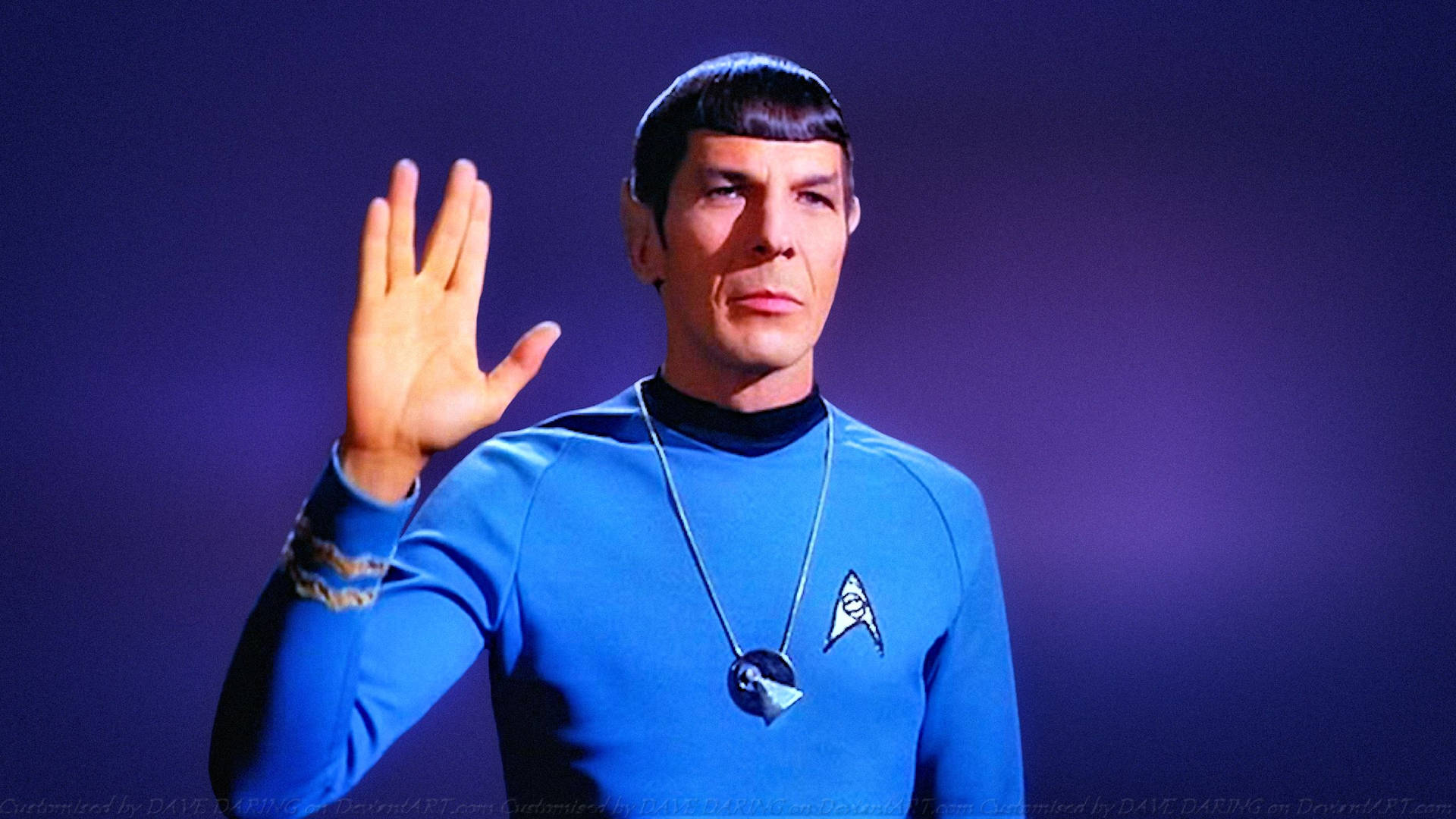
Star Trek's "Spock", played by the Jewish actor Leonard Nimoy

The Birth of 'Live Long and Prosper', 
https://www.youtube.com/watch?v=UdYbpMkH_XQ
"[The sign] came from my childhood, going to synagogue with my family." - Leonard Nimoy

Mork and Mindy, 1978
"Mork" played by Jewish comedic actor Robin Williams

Nanu Nanu, Mork and Mindy Wiki 
https://morkandmindy.fandom.com/wiki/Nanu_nanu

"Nanu nanu (pronounced NAH-noo NAH-noo)...is the typical Orkan greeting. Its usage may be similar to the Hawaiian word "aloha," which may be used as both a greeting and a farewell, since Mork also uses the phrase in his weekly mental reports to Orson.  When meeting new people, the phrase is paired with a Vulcan-style handshake; when addressing another Orkan..."

U. S. President Obama with Star Trek cast member Nichelle Nichols, 2012 (CIA/Mossad operatives)

Nichelle Nichols, Wikipedia:
From 1977 to 2015, she volunteered her time to promote NASA's programs and recruit diverse astronauts...Her brother was a 20 year member of the Heaven's Gate cult [both CIA projects].
She [admittedly had affairs] with both Gene Rodenberry [Jewish creator of Star Trek] and Sammy Davis Jr. [Jewish convert].  She was hired by Hugh (Jew) Hefner as a singer for his Chicago Playboy Club.
Her grandfather was Samuel G. Nichols, a white man who married a black woman, which was taboo at the time.  Her father, Samuel E. Nichols, was the mayor of Robbins, IL.

Obviously, Nichols is from a Jewish family, involved in Intelligence Projects.  The point is, there is an agenda to destroy Christian society, and replace it with an anti-Christian one.  A small part of this has been to get the unsuspecting populace to use this hand sign, which is a repudiation of Christ.

CIA Mossad Pedophile Jew Hugh Hefner, Playboy, Bunny Girls, Staged Chessboard (Tangentially, this video also speaks on the Roman cult of Bacchus.)
https://www.bitchute.com/video/133oHpaokIAF

Heaven's Gate was an Intel Project, Matthis
https://mileswmathis.com/hgate.pdf
Dictionary of American Family Names, 2022
The Meaning of [Surname] Nichols:  2. Americanized form of various like-sounding Jewish surnames.


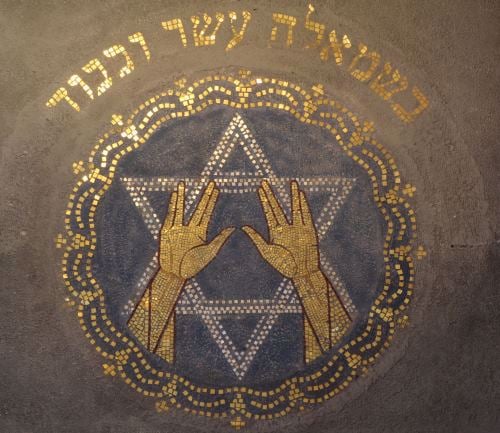
"Yes, the Vulcan salute is an authentic imitation of the manner by which Cohanim spread their hands in most congregations when blessing the congregation to this day.

Cohanim are those people that today comprise about four to five percent of the Jewish population, all of whom trace their paternal lineage back to Aaron, brother of Moses, who was also the first High Priest. The Cohanim performed the offerings in the Tabernacle and later in the Temple in Jerusalem. They are still afforded certain honors, and they still bless the congregation with exactly the same words with which Aaron blessed us over 3,300 years ago when we finally got the first Tabernacle up and standing...

When the Cohanim bless the people, they stand at the front of the synagogue, face the congregation, cover their faces with their tallit (prayer shawl), and spread out their hands... 

The reason the Cohanim raise and spread out their hands is because that’s just what Aaron did when he blessed us: “And Aaron lifted up his hands towards the people and blessed them…”

But why do they spread their fingers? The Midrash explains that the Shechinah—the divine presence, peers through the fingers of the Cohanim during the priestly blessing, in keeping with the verse, “…behold, He is standing behind our wall, looking from the windows, peering between the cracks.”

...Do that correctly, and you have the original version of what became popularized three thousand years later as the Vulcan salute (just with both hands).

...when the priest raises his hands in blessing...That is the time when the most ancient and concealed is revealed in the small faces, and peace prevails in all."

~~~


1 Thes. 5:2-3  ...the day of the Lord shall so come, as a thief in the night. For when they shall say, peace and security; then shall sudden destruction come upon them...


On the Place of Saint Matthew of Bresthena

...Some Correspondence to Consider, Fr. Mark Smith

https://priest-mark.livejournal.com/2815.html 

Dear Stavros,

Do you have a different version of this story?:

"Knowing the history of a man can always help us understand him more. If one goes to the Holy Mountain, one can find disciples from the line of Vicar-Bishop Matthew. When Vicar-Bishop Matthew was on the Holy Mountain, as a priest, he had a disciple named Fr. Damaskinos, who in turn had a synodia, which now survives in Katounakia, and is led by Fr. Augustine. Father Augustine would relate how his elder, Fr. Damaskinos, explained how the elder Matthew left Mount Athos. This is the story:

When Fr. Matthew was asked to leave Mount Athos for Athens to help in the sacred struggle of the Old Calendarists, he was tormented by this decision, as any Athonite monk would be. The cause was good, but he was an Athonite monk, and if this wasn't the will of God, he could perish. At length he went to his spiritual father, and asked his advice. His spiritual father, in a gentle way, told him 'No', saying, "My son, you have made progress by your monastic life here. You are a priest, and have a disciple, and are able to advance more in the spiritual life. You are a simple man, though, and the world is very complicated. If you leave the Holy Mountain, you will be tricked, and you will fall. Do not leave.

Later, the priest-monk Matthew made his decision, and disobeyed his spiritual father and left Mount Athos for Athens. Any man who wishes can go to the Holy Mountain and check this out themselves from the disciples of Fr. (later-Vicar-Bishop) Matthew. They are still alive. Like so many who have left the Holy Mountain in disobedience, this tells us much about the character of Vicar-Bishop Matthew. He did not believe the monastic axiom: "Obedience is life. Disobedience is death."

Dear Father Mark,

The statement you quoted is clearly falsification and Florinite propaganda. By this time St. Matthew had already been the spiritual father and confessor of three entire Monasteries (Megisti Lavra, Grigoriou and Xenophontos). He did not just have one disciple as the below version of the story stupidly suggests, but he rather had hundreds of spiritual children on Mt. Athos and thousands throughout Greece. Also this Damaskinos they mention was not even one of Bishop Matthew's close spiritual children, and he was a Matthewite for the majority of his life and only became a Florinite in the 1980s. Even still, Damaskinos never slandered Bishop Matthew. I have an open letter written by Damaskinos in which he praises 'Matthew of Bresthena, Germanos of the Cyclades and Chrysostom of Florina' has the three Holy Hierarchs of the 20th Century. In other words, Damaskinos went from being a Matthewite to being an old-calendarist ecumenist, placing truth and falsehood together by imagining that the blaspheming Sergianist Chrysostom of Florina could ever be styled a holy hierarch. The claim that Damaskinos wrote the quoted slander against Bishop Matthew is definitely a Florinite falsification.

More proof that the quote is false is the fact that St. Matthew had already been given the blessing to leave Mt. Athos almost 20 years earlier than the time described in the slanderous story. Around the year 1910, the Sacred Community of Mt. Athos voted St. Matthew to be their representative to the laity of Greece, to preach to them and teach them the ways of piety, for St. Matthew was well known throughout Mt. Athos and Greece as being very holy. He lived in a cave at St. Basil's desert on Athos for several years. He performed miracles and fulfilled prophecies while he was still alive! He was already known during the 1910s as 'O Agıos Pateras,' the Holy Father.

In 1910 he was blessed by the Community of Mt Athos to travel around Greece preaching the Divine Word, like a new St. Kosmas Aitolos. While in Greece he founded a very large Church in Navplion, he built it from scratch, and people throughout Peloponnese would visit his parish to hear him preach and for him to pray for them and heal their sicknesses by God's grace. During this time he also became the Spiritual Father of the Pantanassa Convent in the ancient walled city of Mistras, near Sparta and Bresthena. This Convent is still Matthewite today.

He then founded another large Church and parish in Athens, which is also extant. It was at this time that the Orthodox Christians of Athens experienced his holiness. St. Matthew then became closely acquainted wıth St. Nectarios, and St. Nectarios gave his epigonatıon to St. Matthew as a blessing. This epigonation can be venerated today at Keratea Convent. St. Nectarios also elevated St. Matthew to the rank of Archimandrite.

However, when Metaxakis uncanonically usurped the throne of Athens, and when the persecution against St. Nectarıos began, St. Matthew was disgusted by this and returned to Mt. Athos so he could live ın peace, away from the Church politics. However, he kept in touch with his spiritual children in Greece through letters, many of which are extant.

In 1924 when the new calendar was uncanonically introduced, the zealots of Mt. Athos were LED by St. Matthew, yes, LED BY HIM, because they all acknowledged his spirituality. Also assisting him was the simple monk, Arsenios Kotteas, who agreed with him originally, but later, in the 1940s Arsenios switched over to the Florinites because St. Matthew believed in the sainthood of St. Nectarios, while Chrysostom of Florina and Arsenios Kotteas didn't. Thus the Athonites had been broken into two groups, the Matthewites under St. Matthew who was living in Athens by this time, and the Florinites under the deluded Arsenios Kotteas, who later even left the Florinites and founded a priestless jurisdiction called the Kotteates. This faction still exists today on Athos.

Anyway, St. Matthew was invited to Athens in 1927 not merely to assist the sacred struggle, but to LEAD IT!!! He thus became the LEADER of the Sacred Struggle, and it was under his care that between 1927 and 1935 the Old Calendarists multiplied to include over 800 parishes throughout Greece.

In 1935 Bishops Germanos of Demetrias and Chrysostom of Zakynthos, together with the retired former bishop of Florina, Chrysostom, joined the sacred Struggle. By this time, Chrysostom of Florina was merely a suffragan and could not perform the acts of a bishop because he was retired and did not have a current see. The canons forbid retired bishops from occupying any role in the Synod or from ordaining bishops or even priests, because they are no longer valid bishops after retirement, but only retain the title of former bishop as an act of respect to their person, and are allowed to take part in ecclesiastical acts as witnesses but not as actual performers of the act.

Therefore, when the two bishops and the one FORMER bishop joined the sacred struggle, they read their confession openly before St. Matthew, and it was he, as leader of the Sacred Struggle in Greece and Athos, who received them back into communion with whatever level of priesthood they had prior to their loss of grace in 1924 when they fell into schism. Thus Germanos was received as a Bishop, Chrysostom of Florina was received as a FORMER BISHOP, and Chrysostom of Zaktynthos was received as an Archımandrıte who had been consecrated to the episcopacy by schismatics (he had been consecrated after 1924). Following this Bishop Germanos of Demetrias became the sole canonical active bishop of the G.O.C. He thus assumed the position of President and first-hierarch of the G.O.C. and St. Matthew handed the 800 parishes into Bishop Germanos's care. Immediately after this, on the same day, Bishop Germanos, as a valid acting bishop, together with former bishop Chrysostom of Florina, acting only as a witness, read a cheirothesia on Bishop Chrysostom of Zakynthos and elevated him to the rank of a canonical bishop. These two canonical bishops and the one retired bishop, then consecrated four more bishops. All of the bishops were given ruling diocesan titles and were given different parts of Greece to shepherd.

Germanos of Demetrias was to be commemorated within Thessaly and Macedonia, and Athens only for as long as he was President.

Chrysostom of Florina was retired and therefore was not commemorated in any region unless he was visiting a particular parish. He thus held the rank of merely a suffragan with no diocese and no canonical episcopal rights except for the title 'former metropolitan.'

Chrysostom of Zakynthos was to be commemorated on the Ionian Islands

Germanos of the Cyclades was to be commemorated on the Aegean Islands 

Christopher of Megara was to be commemorated in Western Attica region

Polycarp of Diavlia was to be commemorated in northern Continental Greece (Thebes, Levadıa, Lamia, etc)

Matthew of Bresthena was commemorated in the entire Peloponnese region, where he had previously founded parishes and convents and had a large spiritual following, was well as in Crete, his homeland. He was also commemorated in the three parishes he founded in Athens as well as in the Keratea Convent and Kouvara Monastery in Eastern Attica region. He was given the title Bresthena because this is an ancient title in Peloponnese which is situated in the hill country between Navplion and Mistras, Navplion being where the large Church St. Matthew founded was, and Mistras being where the famous Convent of Panagia Pantanassa was located, both being under his spiritual care. Also, his homeland of Crete, where he also had several spiritual children and at least 20 parishes at this time, is located just across the sea to the south. When Chrysostom of Florina created the Florinite schismato-heresy in 1937, the ENTIRE regions of Peloponnese (Corinth, Patras, Messenia, Sparta, Navplion, Arcadia, Elis) and the island of Crete remained under their canonical ruling bishop, St. Matthew of Bresthena. Thus until the Kallistite schism in 1979, the vast majorıty of Peloponnesian and Cretan Old Calendarists were Matthewites. All of the current Florinite parishes in Peloponnese are those stolen from the Matthewites by Kallistos of Corinth, and later stolen from Kallistos by Kallinikos Sarantopoulos, current bishop of Achaia in the Kiousis Synod.

The bishops consecrated in 1935 were thus by no means suffragans, but ruling bishops. The only suffragan was Chrysostom of Florina himself, who, being retired, was only a former bishop with no canonical rıghts.

When the consecrations of 1935 were announced by the Holy Synod, the first three bishops were only mentioned by name, but when they mentioned Bishop Matthew, they wrote (my paraphrase as I am in Turkey at the moment and do not have the document with me):

'We then consecrated Hieromonk Matthew as Bishop of the once in ancient times glorious diocese of Bresthena, a man well-known for his great piety, much holiness and many spiritual gifts, and for his great service to the Orthodox Church and the Sacred Struggle.'

I also have a letter that Chrysostom of Florina sent to Bishop Matthew in 1935, where Chrysostom praises him continuously. Then suddenly when Chrysostom BETRAYED the Sacred Struggle and began working for the Greek government to submit the old calendarists to the new-calendarist state Church, suddenly the Confessor-Bishop Matthew began to be called unworthy and stupid, and all these lies and slander began on the part of the Florinites. Meanwhile Chrysostom of Florina petitioned for the old calendarists to be forcefully submitted to the state church, for the new calendar to be implemented by force if the synod decided this, for the Keratea Convent to be abolished, and he also praised Stalin and praised Sergius Stragorodsky for his declaration of 1927, and he was also involved with left-wing political parties, and despite the fact that Chrysostom was a TRAITOR, a WOLF IN SHEEP'S CLOTHING and a SERGIANIST to boot, the Florinites lift him up to the seventh heaven, believing that despite all of these heresies, Chrysostom is somehow infallible like some kind of 'old calendar pope'.

Yet whereas St. Matthew held the true confession until his last breath (something Chrysostom FAILED TO DO), past down the apostolic succession to the next generation (something Chrysostom FAILED TO DO), and also guarded the Church from the heresy of Sergianism (something Chrysostom FAILED TO DO), yet they completely turn a blind eye and a deaf ear to St. Matthew's ORTHODOX example, and instead come up with all manner of slander and every kind of lie their demon-possessed minds can conceive.

A lengthy book with all the lives of the new Matthewite Saints will soon be published (there are almost 30 of these new saints). It will include several documents including photocopies of original documents in Greek as well as English translations of the same which will verify EVERY SINGLE STATEMENT MADE ABOVE concerning the holiness of Bishop Matthew as well as EXPOSING the truth about the traitor Chrysostom of Florina with his own words, ı.e., letters Chrysostom of Florina himself had sent to the government, to the state church and to Bishop Matthew and others, proving that Chrysostom of Florina's true desire was to destroy the Sacred Struggle from within.

Unlike the Florinites who cannot find one true fault against Bishop Matthew and therefore resort to LIES and SLANDER that cannot be verified, this book will include ACTUAL DOCUMENTS that prove Chrysostom was a traitor and false-bishop while Bishop Matthew was a True Confessor.

Another interesting note is that the Kiousis Synod's Bishop Kallinikos Sarantopoulos sent a letter to the Matthewite Synod in 1998, in which he writes that he recognizes 'the Matthewite Synod as the true successors of Bishop Matthew, a holy man.' YES!!! A Florinite Bishop, and the most ANTI-MATTHEWITE Bishop among them (!!!), even confesses openly that Bishop Matthew was A HOLY MAN!! Therefore all other Florinites should swallow their tongues before daring to slander St. Matthew the New Confessor.

When the book is published all of these questions will be answered for anyone who reads the documents contained therein.

In Christ,

Stavros


Also See:

The Life of Saint Matthew the New Confessor (1861-1950), Mercian Monks
https://www.youtube.com/watch?v=lbeQtJaFShU


Sunday, June 15, 2025

The Calendar Question

--- A Classic Defense of the Old Calendar, proving it is part of the Tradition of the Church, by Fr. Basile Sakkas
https://www.hotca.org/orthodoxy/orthodox-awareness/203-the-calendar-question

***This link to the schismatic HOTCA website is recommended only for its English translation of The Calendar Question, which can be accessed for free.  Though Fr. Basile thoroughly explains the importance of the Church's ecclesiastical calendar, one should keep in mind that he was a member of the Russian Orthodox Church Outside Russia (ROCOR), which never condemned the new calendar schism.  Fr. Basile also remained devoted to his Bishop, Anthony of Geneva, the ROCOR ecumenist who fought the condemnation of the new calendar.  

In 1935, the Genuine Orthodox Church in Greece synodally condemned those who adopt the "Revised Julian Calendar" as graceless schismatics:

Pastoral Encyclical to the Orthodox Greek People - 1935
http://genuineorthodoxchurch.com/1935encyclical.htm

When one refuses to condemn a schism, but rather communes with schismatics (as ROCOR has done from the beginning), he becomes a schismatic himself.  But in the wake of ROCOR's condemnation of the Ecumenical Patriarch for his 1965 lifting of the anathema against Rome, the GOC had reason to hope that ROCOR would finally condemn, rather than tolerate, the abandonment of the ecclesiastical calendar.  

In 1971, the Genuine Orthodox Church (GOC) of Greece (Matthewite Synod) entered into communion with the ROCOR after the Synod agreed whole-heartedly with the GOC's Confession of Faith.  ROCOR then promised to confirm its verbal agreement with the GOC in an official statement condemning the new calendar as schismatic and therefore graceless.  In light of this, The Calendar Question was originally a 1972 report submitted to the secretary (Bp. Vitaly) of ROCOR, to be addressed at its next synodal meeting.  ROCOR could not reach a consensus, however.  In 1975, the Synod finally replied to the GOC, saying that though the abandonment of the ecclesiastical calendar caused a schism, ROCOR still would not make a determination as to the presence of grace among the New Calendarists.  So, in 1976 the GOC broke communion with the schismatic ROCOR.  See:

The G.O.C. and R.O.C.O.R. - 1971
http://genuineorthodoxchurch.com/rocor1971.htm


Thursday, June 5, 2025

How To Set Up a Home Prayer Corner

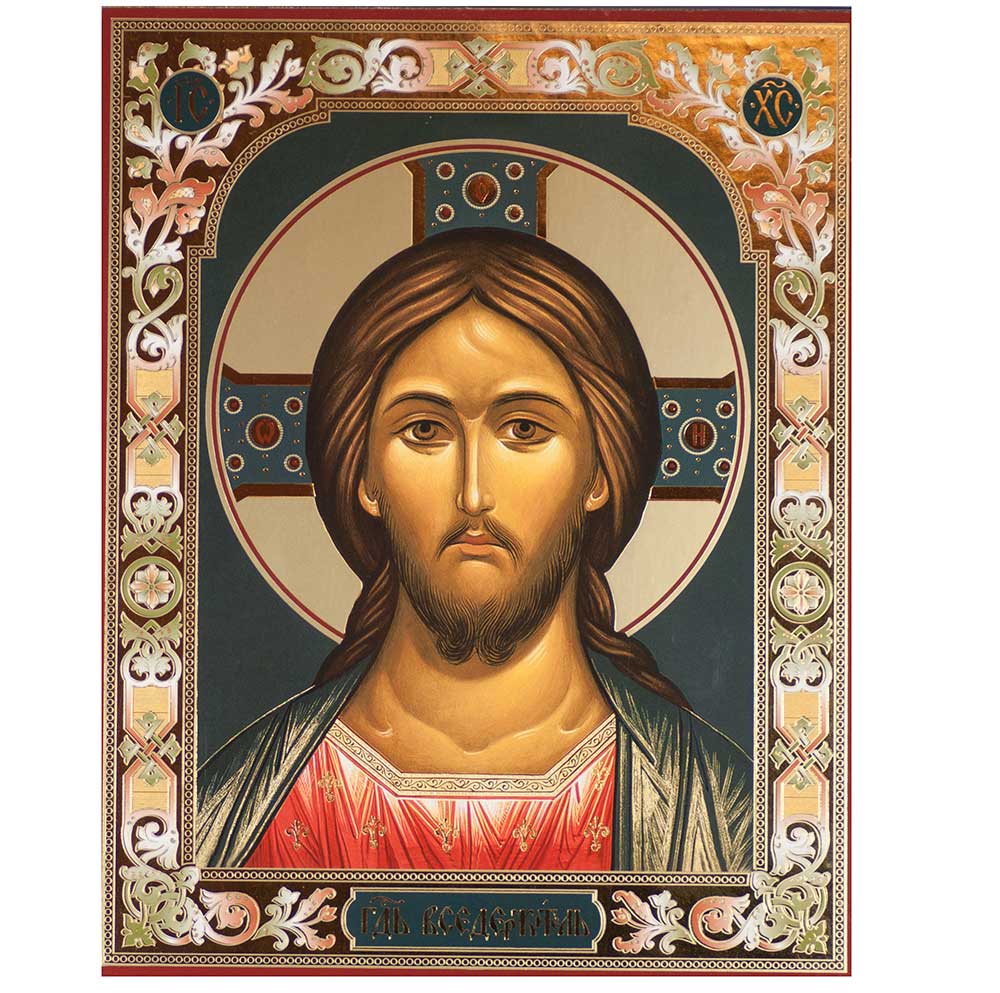
Christ Pantocrator


This article is taken from the schismatic Russian St. John the Baptist Cathedral website:

Parishioners often ask how one should set up a home chapel/prayer corner. We offer for your consideration the article by Serge Alexeev, and hope that in it our readers will find answers to the questions most frequently posed. The article has been abridged.

  • Where to place icons at home?
  • Which icons should you have at home?
  • How and in what order should you arrange your icons? Are there strict rules in that regard?
  • What should be our attitude toward holy things? What should you do if an icon's condition has rendered it unfit for use and it cannot be restored?

Quantity and quality are two different categories. It would be naïve to assume that the more holy images there are in an Orthodox Christian's house, the more pious his life is. A disorganized collection of icons, prints, religious wall calendars covering a significant amount of living space, can often have a directly opposite effect on a person's spiritual life.

…Poorly thought out assembling of a collection of icons can turn into simple, meaningless collecting, something in which the prayerful purpose of the icon has no role whatsoever.

Nonetheless, it is essential to have icons in one's home - in sufficient numbers, but within reasonable limits.

In the past, whether on the farm or in the city, any Orthodox family's home would always have a shelf with icons, or an entire home icon screen, located in the most visible place. The place where the icons were installed was known as the front corner, the bright corner, the holy corner, God's place, or the shrine.

For the Orthodox Christian, the icon is not just a depiction of the Lord Jesus Christ, the Mother of God, the Saints or of events in the history of the Church. The Icon is a sacred depiction, i.e. it rests outside the realm of ordinary reality; it is not to be confused with ordinary daily life, and is intended only for communion with God. Thus, the primary purpose of icons is for prayer. The Icon is the window from the world above into our world, the earthly world; it is God's revelation, made in delineated form and color. In this way, the Icon is not simply a family relic to be passed on from generation to generation, but a holy thing - a holy thing that unites all of the members of the family during communal prayer, for prayer in common can take place only if those standing before the Icon have mutually forgiven one another's offenses, and have achieved complete unity.

Of course, to a great extent today, when the place of the icons in the home has been taken by the television set, itself a kind of a window into the motley world of human passions, the purpose of the family icon, the tradition of common prayer at home, and the consciousness of the family as the "little Church" has been lost.

Therefore, the Orthodox Christian living in a city apartment today may ask: What icons must I have in my home? What is the proper arrangement for them? Can I use reproductions of icons? What do I do with old dilapidated icons?

Some of these questions merit an unequivocal answer, while others do not demand any kind of strict recommendations.

Where to place icons at home?

In an available and accessible place.

The terse nature of such an answer is evoked by the realities of life, rather than by the absence of canonical requirements.

Of course, it is preferable to place icons on the eastern wall of the room, because the East as a theological concept has special significance in Orthodoxy.

And the Lord God planted a garden eastward in Eden; and there he put the man whom he had formed. (Genesis 2: 8)

O Jerusalem, look about thee toward the east, and behold the joy that cometh unto thee from God. (Baruch 4: 36)

Moreover the spirit lifted me up, and brought me unto the east gate of the Lord's house, which looketh eastward. (Ezekiel 11: 1)

For as the lightning cometh out of the east, and shineth even unto the west; so shall also the coming of the Son of man be. (Matthew 24: 27)

But what do you do if the house is so oriented that there are windows or doors on the eastern side? In that case, use the Southern, Northern, or Western walls of the home.

One must not combine icons with decorative objects of a secular nature such as statuettes, various types of panels, etc.

It is inappropriate to put icons onto a bookshelf next to books having nothing in common with Orthodox Truth, or books conflicting with the Christian teaching on love and charity.

It is absolutely impermissible to have icons next to signs or wall calendars on which there are photographs of rock musicians, athletes, or politicians - the idols of the current age. This not only diminishes the significance of reverence for holy images to an unacceptable level, but also puts holy icons on a par with idols of the contemporary world.

The home iconostasis can be decorated with live flowers. Traditionally, larger icons are often framed with towels. This tradition dates back to antiquity and has a theological basis. According to Tradition, an image of the Savior miraculously appeared during His life on earth in order to help a suffering man. After washing His Face, Christ wiped His Face with a clean towel, and an image of His Face appeared upon it; the towel was sent to the city of Edessa, in Asia Minor, to King Abgar, who was afflicted with leprosy. Upon being healed, the ruler and his subjects adopted Christianity, and the Image-Not-Made-By-Hands of Jesus Christ was affixed to a "permanent plaque" and raised above the city gates.

In times past, 29 August (new style calendar), the day the Church commemorates the translation of the Image Not-Made-By-Hands of our Lord Jesus Christ from Edessa to Constantinople in 944, was known among the people as the feast of the "canvas" or "linen Savior," and in some places fabric and towels made of homespun yarn were blessed.

These towels were richly embroidered and were reserved for use in the Bozhnitsa. Likewise, icons were framed by towels used during weddings and during Molebens with the Blessing of the Waters. Thus, for example, after the service for the Blessing of the Waters, when the priest would sprinkle [the icons] abundantly with Holy Water, people would wipe the icons with special towels and would incorporate them into the Bright Corner.

There is a tradition that, after the celebration of the Lord's Entry into Jerusalem, or Palm Sunday, pussy willow branches that had been blessed in church are to be kept near the icons until the next Palm Sunday.

It is the custom that on Pentecost, the Day of the Holy Trinity, the dwelling and icons should be decorated with birch branches as a symbol of the thriving Church, bearing the grace-filled power of the Holy Spirit.

Which icons should you have at home?

It is essential to have icons of the Savior and of the Mother of God. The Image of the Lord Jesus Christ - bearing witness to the Divine Incarnation and Salvation of humankind, and that of the Theotokos, the most perfect of those living on earth, the one made worthy of complete deification, the one revered as more honorable than the Cherubim and beyond compare more glorious than the Seraphim (Hymn of praise to the Most-holy Theotokos) - are an essential part of the Orthodox Christian home. The icon of Christ ordinarily selected for prayer at home, is that of the Lord Pantokrator, a waist-length depiction of the Savior. (…)

Those with room for a greater number of icons in the home may supplement their iconostasis with depictions of revered local saints and, of course, of the great saints of Russia.

Russian Orthodoxy has a strong tradition of special veneration for Holy Hierarch Nicholas the Wonderworker; almost every Orthodox family has an icon of St. Nicholas. One should note that together with the icons of the Savior and the Mother of God, the image of St. Nicholas the Wonderworker has always occupied a central place in the Orthodox Christian home. The people revere Holy Hierarch Nicholas as a saint endowed with special grace. This in large part stems from the fact that according to the Church rubric, each Thursday, when the Church offers up prayers to the Holy Apostles, it also offers up prayers to St Nicholas the Wonderworker, Archbishop of Myra in Lycia.

Among the icons of the Holy Prophets of God, that of the Prophet Elias holds a prominent place; prominent among the icons of the Holy Apostles, is that of the Pre-eminent Apostles Sts. Peter and Paul.

Among the images of martyrs for the Faith in Christ most often encountered are icons of Holy Great Martyr and Trophy-bearer St. George, and the Holy Great Martyr and Healer St. Panteleimon.

It is recommended to have depictions of the Holy Evangelists, of St. John the Baptist, of the Holy Archangels Gabriel and Michael, as well as icons of the Feasts, to make a home iconostasis complete.

The selection of icons for the home is always an individual matter. The best person to help one make those choices is the priest, the family spiritual director, and it is to him, or to another clergyman, that one should turn for advice.

As for icon reproductions and color photographs, sometimes it makes more sense to have a good reproduction than a painted icon of poor quality.

The iconographer must maintain a very demanding attitude toward his work. Just as the priest has no right to serve the Liturgy without the necessary preparation, the iconographer must approach his service with all due, full, awareness of responsibility [he bears for his work]. Unfortunately, both in the past and today, one often encounters vulgar examples of [icons that are] things bearing no resemblance to icons. Thus, if a given depiction does not evoke a sense of piety and a sense of contact with the holy, if its exposition is theologically questionable and its technical execution is unprofessional, it would be best not to purchase such an item.

However, reproductions of canonical icons, mounted on a firm backing, and blessed in the Church, can occupy a place of honor in the home iconostasis.

How and in what order should you arrange your icons?

Are there strict rules in that regard?

In church, yes. As to the home prayer corner, we may limit [discussion] to but a few principal rules.

For example, an assemblage of icons hung without a sense of symmetry, without a well thought-out arrangement, evokes a constant sense of dissatisfaction with the arrangement, a desire to change everything, something that often distracts from prayer.

It is likewise essential to remember the principle of hierarchy: for example, do not put an icon of a locally venerated saint above the icon of the Holy Trinity, the Savior, the Mother of God, or the Apostles.

Just as in a classic iconostasis, the Icon of the Savior must be to the right, and the Mother of God to the left [of the center of the prayer corner].

What should be our attitude toward holy things?

As one of the attributes of God (Holy, Holy, Holy is the Lord Sabaoth! (Isaiah 6: 3) holiness is also reflected in the worthy ones of God and in physical objects. Therefore, reverence for holy people and sacred objects and images, and likewise a personal striving toward authentic Communion with God are manifestations of a single order.

And ye shall be holy unto me: for I the Lord am holy... (Leviticus 20: 26).

A patronal icon has always been held in particular reverence. Following baptism, an infant would be brought before the icon and the priest or the master of the house would read prayers. Parents would bless their children with the icon to pursue studies, to go on extended journeys, and to engage in public service. As a sign of their approval of a wedding, the parents would likewise bless the newlyweds with an icon. Moreover, a person's departure from this life would take place in the presence of icons.

The well-known expression "you were divorced; at least bring out the saints" bears witness to people's conscientious attitude toward icons. It would be impermissible to have arguments, or engage in rowdy or otherwise improper behavior before the images of the saints.

One should instill proper reverence for holy images [in children] from a very early age.

What should you do if an icon's condition has rendered it unfit for use and it cannot be restored?

Under no circumstance can such an icon, even one that has not been blessed, be simply thrown away. A holy item, even if it has lost its original appearance, should always be treated with reverence.

If the condition of the icon has deteriorated with age, it should be taken to the church, to be burned in the church furnace. If that should be impossible, you should burn the icon yourself, and bury the ashes in a place that will not be sullied or disturbed, e.g. in a cemetery or under a tree in the garden.

The faces that look out at us from the icons belong to eternity. Gazing upon them, raise up your prayers to them, asking for their intercession. We, the inhabitants of the earthly world must never forget our Creator and Savior, His eternal call to repentance, His call to constantly perfect ourselves, and his call for the deification of each human soul.