Pages

Wednesday, June 18, 2025

Are You Giving Others an Antichrist Blessing?


According to St. Leo the Great, the Aaronic priesthood signifies a "temporal ministry", whereas Jesus Christ is of the order of Melchizedeck:

St. Leo the Great, Pope of Rome, Sermon 3, #I. The honor of being raised to the episcopate must be referred solely to the Divine Head of the Church [Jesus Christ]:  ...For it is He [Christ] of whom it is prophetically written, You are a priest forever after the order of Melchizedeck, that is, not after the order of Aaron, whose priesthood descending along his own line of offspring was a temporal ministry, and ceased with the law of the Old Testament, but after the order of Melchizedeck, in whom was prefigured the eternal High Priest.  And no reference is made to his parentage because in him it is understood that He was portrayed, whose generation cannot be declared.  And finally, now that the mystery of this Divine priesthood has descended to human agency, it runs not by the line of birth, nor is that which flesh and blood created, chosen, but without regard to the privilege of paternity and succession by inheritance, those men are received by the Church as its rulers whom the Holy Ghost prepares: so that in the people of God's adoption, the whole body of which is priestly and royal, it is not the prerogative of earthly origin which obtains the unction, but the condescension of Divine grace which creates the bishop.

After the rejection of the true Messiah, the Jews tried to hide His lineage by altering the dates in the book of Genesis.  In doing so, they tried to say Jesus Christ's priesthood was only an Aaronic priesthood.  Jews rejected Christ because they want a secular kingdom.  They are tirelessly working for the coming of their Mashiach, and will accept Antichrist as their Aaronic king.
John 5;43  I am come in the name of My Father, and you receive Me not: if another shall come in his own name, him you will receive.


Star Trek's "Spock", played by the Jewish actor Leonard Nimoy

The Birth of 'Live Long and Prosper', 
https://www.youtube.com/watch?v=UdYbpMkH_XQ
"[The sign] came from my childhood, going to synagogue with my family." - Leonard Nimoy

Mork and Mindy, 1978
"Mork" played by Jewish comedic actor Robin Williams

Nanu Nanu, Mork and Mindy Wiki 
https://morkandmindy.fandom.com/wiki/Nanu_nanu

"Nanu nanu (pronounced NAH-noo NAH-noo)...is the typical Orkan greeting. Its usage may be similar to the Hawaiian word "aloha," which may be used as both a greeting and a farewell, since Mork also uses the phrase in his weekly mental reports to Orson.  When meeting new people, the phrase is paired with a Vulcan-style handshake; when addressing another Orkan..."

U. S. President Obama with Star Trek cast member Nichelle Nichols, 2012 (CIA/Mossad operatives)

Nichelle Nichols, Wikipedia:
From 1977 to 2015, she volunteered her time to promote NASA's programs and recruit diverse astronauts...Her brother was a 20 year member of the Heaven's Gate cult [both CIA projects].
She [admittedly had affairs] with both Gene Rodenberry [Jewish creator of Star Trek] and Sammy Davis Jr. [Jewish convert].  She was hired by Hugh (Jew) Hefner as a singer for his Chicago Playboy Club.
Her grandfather was Samuel G. Nichols, a white man who married a black woman, which was taboo at the time.  Her father, Samuel E. Nichols, was the mayor of Robbins, IL.

Obviously, Nichols is from a Jewish family, involved in Intelligence Projects.  The point is, there is an agenda to destroy Christian society, and replace it with an anti-Christian one.  A small part of this has been to get the unsuspecting populace to use this hand sign, which is a repudiation of Christ.

CIA Mossad Pedophile Jew Hugh Hefner, Playboy, Bunny Girls, Staged Chessboard (Tangentially, this video also speaks on the Roman cult of Bacchus.)
https://www.bitchute.com/video/133oHpaokIAF

Heaven's Gate was an Intel Project, Matthis
https://mileswmathis.com/hgate.pdf
Dictionary of American Family Names, 2022
The Meaning of [Surname] Nichols:  2. Americanized form of various like-sounding Jewish surnames.


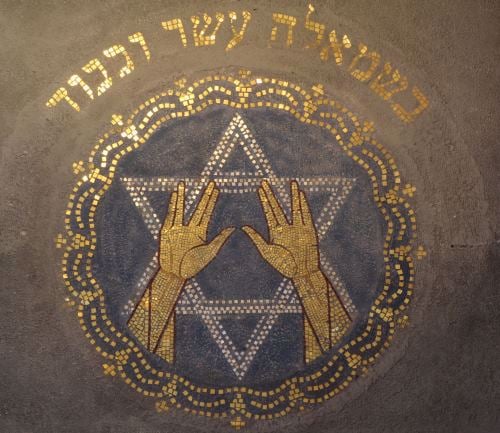
"Yes, the Vulcan salute is an authentic imitation of the manner by which Cohanim spread their hands in most congregations when blessing the congregation to this day.

Cohanim are those people that today comprise about four to five percent of the Jewish population, all of whom trace their paternal lineage back to Aaron, brother of Moses, who was also the first High Priest. The Cohanim performed the offerings in the Tabernacle and later in the Temple in Jerusalem. They are still afforded certain honors, and they still bless the congregation with exactly the same words with which Aaron blessed us over 3,300 years ago when we finally got the first Tabernacle up and standing...

When the Cohanim bless the people, they stand at the front of the synagogue, face the congregation, cover their faces with their tallit (prayer shawl), and spread out their hands... 

The reason the Cohanim raise and spread out their hands is because that’s just what Aaron did when he blessed us: “And Aaron lifted up his hands towards the people and blessed them…”

But why do they spread their fingers? The Midrash explains that the Shechinah—the divine presence, peers through the fingers of the Cohanim during the priestly blessing, in keeping with the verse, “…behold, He is standing behind our wall, looking from the windows, peering between the cracks.”

...Do that correctly, and you have the original version of what became popularized three thousand years later as the Vulcan salute (just with both hands).

...when the priest raises his hands in blessing...That is the time when the most ancient and concealed is revealed in the small faces, and peace prevails in all."

~~~


1 Thes. 5:2-3  ...the day of the Lord shall so come, as a thief in the night. For when they shall say, peace and security; then shall sudden destruction come upon them...


Pastoral Encyclical to the Orthodox Greek People, 1935

http://genuineorthodoxchurch.com/1935encyclical.htm

Unjustly condemned by the schismatic Synod to deposition and a five-year imprisonment in monasteries, and seized by force by the government [which has become the executory arm of the (new calendar) Archdiocese, which by its mere word has placed itself above the divine canons, the (Church's) Charter, and the Constitution of Greece] because we had the courage and spiritual strength to raise the glorious and venerable banner of Orthodoxy, we consider it our pastoral duty before we depart [for prison] to direct the following admonitions to you that adhere to the Orthodox festal calendar of our fathers:

While faithfully following the Apostle's admonition, "Stand fast and hold the traditions which ye have been taught, whether by word, or by our letter," do not cease from struggling by every lawful and Christian means for the strengthening and triumph of our sacred struggle, which looks to the restoration of the patristic and Orthodox festal calendar within the Church; only this can re-establish the diminished Orthodox authority of the Greek Church and bring back the peace and unity of the Orthodox Greek people. By the judgments which the Lord knows, the majority of the hierarchy of the Greek Church, under the influence and initiative of its president, has placed the blot of schism upon what up until now had been its pure and truly Orthodox countenance, when it rejected the Orthodox festal calendar — which has been consecrated by the Seven Ecumenical Councils and ratified by the age-long practice of the Orthodox Eastern Church — and replaced it with the papal calendar.

Of course, this schism of the Orthodox Greek people was created by the majority of the hierarchy, which forgot its sacred and national mission and the old Greek [revolutionary] slogan: "Fight for Orthodoxy and for Greek liberty," and which, without the agreement of all the Orthodox Churches, introduced the papal festal calendar into our divine worship, thereby dividing not only the Orthodox Churches, but also the Orthodox Christians into two opposing camps.

In assuming the pastorship of the Orthodox Greek populace that follows the Orthodox festal calendar of our fathers, and being conscious of the oath of faith that we took that we would keep all that we have received from the seven Ecumenical Councils, we abjure every innovation and can not but proclaim as schismatic the State Church, which has accepted the papal festal calendar which has been described by Pan-Orthodox Councils as an innovation of the heretics and as an arbitrary trampling underfoot of the divine and sacred canons of the ecclesiastical traditions.

On account of this, we counsel all who follow the Orthodox festal calendar to have no spiritual communion with the schismatic Church and its schismatic ministers, from whom the grace of the All-holy Spirit has departed, since they have set at nought the resolutions of the Fathers of the Seven Ecumenical Councils and the Pan-Orthodox Councils that condemned the Gregorian festal calendar. The fact that the Schismatic Church does not have grace and the Holy Spirit is confirmed by Saint Basil the Great, who says: "Even though the schismatics have not erred in doctrines, yet because Christ is the Head of the Body of the Church, according to the divine Apostle, and from Him are all the members quickened and receive spiritual increase, the [schismatics] have been torn from the consonance of the members of the Body and no longer have the grace of the Holy Spirit abiding with them. And how, indeed, can they impart to others that which they have not?" While the Schismatic Church imposes oppressive and intolerable measures in order to violate our Orthodox conscience, we exhort you to endure all things and to preserve the Orthodox heritage intact and unstained, even as we received it from our pious Fathers, having us as luminous and fortifying examples, seeing we are not afraid — even in the waning years of our lives — to withstand with boldness and dignity the bigoted and medieval measures of our exile and imprisonment in monasteries, as it were in prisons.

Esteeming this as honour and glory and joy, according to the Apostle, who enjoins us to rejoice and boast in or sufferings in behalf of Christ, we counsel you also to have endurance and persistence in these griefs, and afflictions, and evils, and outrages to which you will be subjected by a Church that is schismatic; and ever hope in God, Who will not permit that you be tried above what you are able to endure, and Who, in His infinite and unfathomable long-suffering, will be well-pleased to enlighten those who, out of innocence, have been led astray and follow the papal festal calendar; and in the end may he grant you the triumph of Orthodoxy and the unity of those who bear the name of Christ, the Orthodox Greek people, for whom we struggle to the glory of Christ, Whose grace and infinite mercy be with you all.

Germanos of Demetrias

Chrysostom of Florina

Germanos of the Cyclades Islands


Sunday, June 15, 2025

The Calendar Question

--- A Classic Defense of the Old Calendar, proving it is part of the Tradition of the Church, by Fr. Basile Sakkas
https://www.hotca.org/orthodoxy/orthodox-awareness/203-the-calendar-question

***This link to the schismatic HOTCA website is recommended only for its English translation of The Calendar Question, which can be accessed for free.  Though Fr. Basile thoroughly explains the importance of the Church's ecclesiastical calendar, one should keep in mind that he was a member of the Russian Orthodox Church Outside Russia (ROCOR), which never condemned the new calendar schism.  Fr. Basile also remained devoted to his Bishop, Anthony of Geneva, the ROCOR ecumenist who fought the condemnation of the new calendar.  

In 1935, the Genuine Orthodox Church in Greece synodally condemned those who adopt the "Revised Julian Calendar" as graceless schismatics:

Pastoral Encyclical to the Orthodox Greek People - 1935
http://genuineorthodoxchurch.com/1935encyclical.htm

When one refuses to condemn a schism, but rather communes with schismatics (as ROCOR has done from the beginning), he becomes a schismatic himself.  But in the wake of ROCOR's condemnation of the Ecumenical Patriarch for his 1965 lifting of the anathema against Rome, the GOC had reason to hope that ROCOR would finally condemn, rather than tolerate, the abandonment of the ecclesiastical calendar.  

In 1971, the Genuine Orthodox Church (GOC) of Greece (Matthewite Synod) entered into communion with the ROCOR after the Synod agreed whole-heartedly with the GOC's Confession of Faith.  ROCOR then promised to confirm its verbal agreement with the GOC in an official statement condemning the new calendar as schismatic and therefore graceless.  In light of this, The Calendar Question was originally a 1972 report submitted to the secretary (Bp. Vitaly) of ROCOR, to be addressed at its next synodal meeting.  ROCOR could not reach a consensus, however.  In 1975, the Synod finally replied to the GOC, saying that though the abandonment of the ecclesiastical calendar caused a schism, ROCOR still would not make a determination as to the presence of grace among the New Calendarists.  So, in 1976 the GOC broke communion with the schismatic ROCOR.  See:

The G.O.C. and R.O.C.O.R. - 1971
http://genuineorthodoxchurch.com/rocor1971.htm


Thursday, June 5, 2025

How To Set Up a Home Prayer Corner

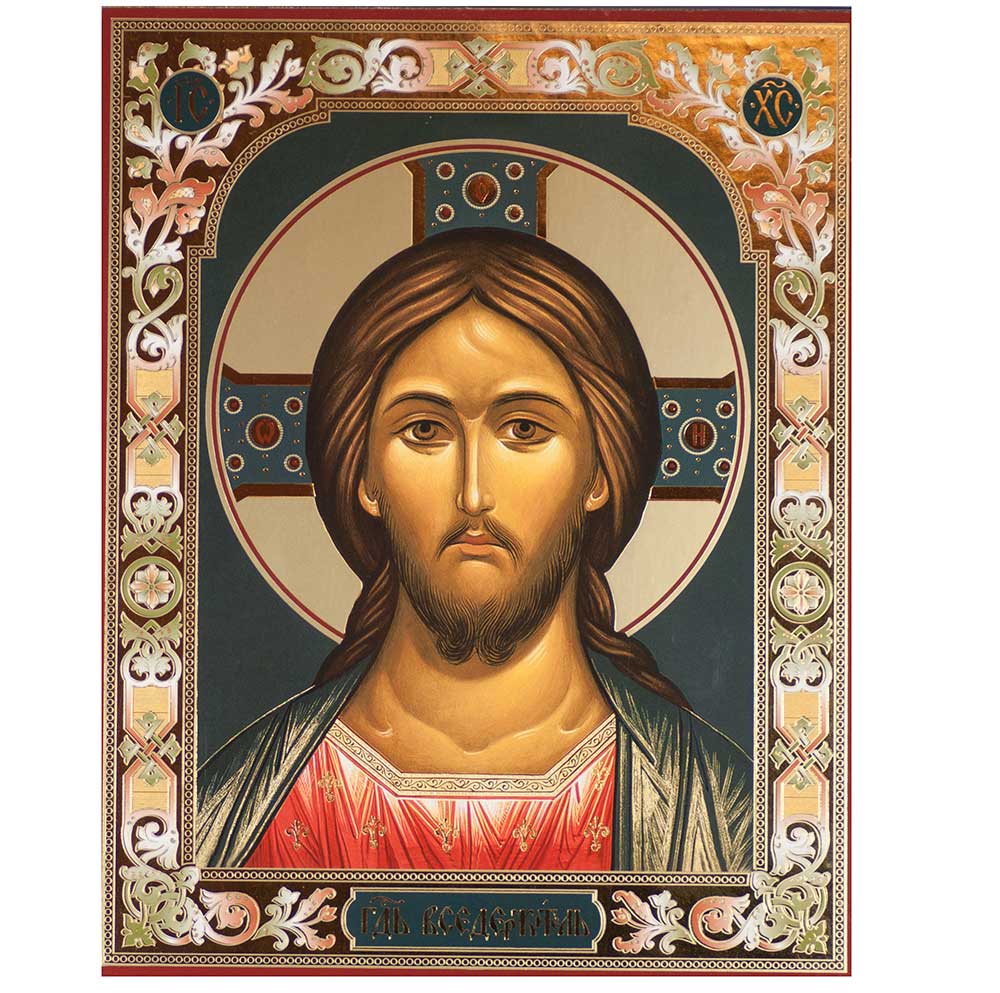
Christ Pantocrator


This article is taken from the schismatic Russian St. John the Baptist Cathedral website:

Parishioners often ask how one should set up a home chapel/prayer corner. We offer for your consideration the article by Serge Alexeev, and hope that in it our readers will find answers to the questions most frequently posed. The article has been abridged.

  • Where to place icons at home?
  • Which icons should you have at home?
  • How and in what order should you arrange your icons? Are there strict rules in that regard?
  • What should be our attitude toward holy things? What should you do if an icon's condition has rendered it unfit for use and it cannot be restored?

Quantity and quality are two different categories. It would be naïve to assume that the more holy images there are in an Orthodox Christian's house, the more pious his life is. A disorganized collection of icons, prints, religious wall calendars covering a significant amount of living space, can often have a directly opposite effect on a person's spiritual life.

…Poorly thought out assembling of a collection of icons can turn into simple, meaningless collecting, something in which the prayerful purpose of the icon has no role whatsoever.

Nonetheless, it is essential to have icons in one's home - in sufficient numbers, but within reasonable limits.

In the past, whether on the farm or in the city, any Orthodox family's home would always have a shelf with icons, or an entire home icon screen, located in the most visible place. The place where the icons were installed was known as the front corner, the bright corner, the holy corner, God's place, or the shrine.

For the Orthodox Christian, the icon is not just a depiction of the Lord Jesus Christ, the Mother of God, the Saints or of events in the history of the Church. The Icon is a sacred depiction, i.e. it rests outside the realm of ordinary reality; it is not to be confused with ordinary daily life, and is intended only for communion with God. Thus, the primary purpose of icons is for prayer. The Icon is the window from the world above into our world, the earthly world; it is God's revelation, made in delineated form and color. In this way, the Icon is not simply a family relic to be passed on from generation to generation, but a holy thing - a holy thing that unites all of the members of the family during communal prayer, for prayer in common can take place only if those standing before the Icon have mutually forgiven one another's offenses, and have achieved complete unity.

Of course, to a great extent today, when the place of the icons in the home has been taken by the television set, itself a kind of a window into the motley world of human passions, the purpose of the family icon, the tradition of common prayer at home, and the consciousness of the family as the "little Church" has been lost.

Therefore, the Orthodox Christian living in a city apartment today may ask: What icons must I have in my home? What is the proper arrangement for them? Can I use reproductions of icons? What do I do with old dilapidated icons?

Some of these questions merit an unequivocal answer, while others do not demand any kind of strict recommendations.

Where to place icons at home?

In an available and accessible place.

The terse nature of such an answer is evoked by the realities of life, rather than by the absence of canonical requirements.

Of course, it is preferable to place icons on the eastern wall of the room, because the East as a theological concept has special significance in Orthodoxy.

And the Lord God planted a garden eastward in Eden; and there he put the man whom he had formed. (Genesis 2: 8)

O Jerusalem, look about thee toward the east, and behold the joy that cometh unto thee from God. (Baruch 4: 36)

Moreover the spirit lifted me up, and brought me unto the east gate of the Lord's house, which looketh eastward. (Ezekiel 11: 1)

For as the lightning cometh out of the east, and shineth even unto the west; so shall also the coming of the Son of man be. (Matthew 24: 27)

But what do you do if the house is so oriented that there are windows or doors on the eastern side? In that case, use the Southern, Northern, or Western walls of the home.

One must not combine icons with decorative objects of a secular nature such as statuettes, various types of panels, etc.

It is inappropriate to put icons onto a bookshelf next to books having nothing in common with Orthodox Truth, or books conflicting with the Christian teaching on love and charity.

It is absolutely impermissible to have icons next to signs or wall calendars on which there are photographs of rock musicians, athletes, or politicians - the idols of the current age. This not only diminishes the significance of reverence for holy images to an unacceptable level, but also puts holy icons on a par with idols of the contemporary world.

The home iconostasis can be decorated with live flowers. Traditionally, larger icons are often framed with towels. This tradition dates back to antiquity and has a theological basis. According to Tradition, an image of the Savior miraculously appeared during His life on earth in order to help a suffering man. After washing His Face, Christ wiped His Face with a clean towel, and an image of His Face appeared upon it; the towel was sent to the city of Edessa, in Asia Minor, to King Abgar, who was afflicted with leprosy. Upon being healed, the ruler and his subjects adopted Christianity, and the Image-Not-Made-By-Hands of Jesus Christ was affixed to a "permanent plaque" and raised above the city gates.

In times past, 29 August (new style calendar), the day the Church commemorates the translation of the Image Not-Made-By-Hands of our Lord Jesus Christ from Edessa to Constantinople in 944, was known among the people as the feast of the "canvas" or "linen Savior," and in some places fabric and towels made of homespun yarn were blessed.

These towels were richly embroidered and were reserved for use in the Bozhnitsa. Likewise, icons were framed by towels used during weddings and during Molebens with the Blessing of the Waters. Thus, for example, after the service for the Blessing of the Waters, when the priest would sprinkle [the icons] abundantly with Holy Water, people would wipe the icons with special towels and would incorporate them into the Bright Corner.

There is a tradition that, after the celebration of the Lord's Entry into Jerusalem, or Palm Sunday, pussy willow branches that had been blessed in church are to be kept near the icons until the next Palm Sunday.

It is the custom that on Pentecost, the Day of the Holy Trinity, the dwelling and icons should be decorated with birch branches as a symbol of the thriving Church, bearing the grace-filled power of the Holy Spirit.

Which icons should you have at home?

It is essential to have icons of the Savior and of the Mother of God. The Image of the Lord Jesus Christ - bearing witness to the Divine Incarnation and Salvation of humankind, and that of the Theotokos, the most perfect of those living on earth, the one made worthy of complete deification, the one revered as more honorable than the Cherubim and beyond compare more glorious than the Seraphim (Hymn of praise to the Most-holy Theotokos) - are an essential part of the Orthodox Christian home. The icon of Christ ordinarily selected for prayer at home, is that of the Lord Pantokrator, a waist-length depiction of the Savior. (…)

Those with room for a greater number of icons in the home may supplement their iconostasis with depictions of revered local saints and, of course, of the great saints of Russia.

Russian Orthodoxy has a strong tradition of special veneration for Holy Hierarch Nicholas the Wonderworker; almost every Orthodox family has an icon of St. Nicholas. One should note that together with the icons of the Savior and the Mother of God, the image of St. Nicholas the Wonderworker has always occupied a central place in the Orthodox Christian home. The people revere Holy Hierarch Nicholas as a saint endowed with special grace. This in large part stems from the fact that according to the Church rubric, each Thursday, when the Church offers up prayers to the Holy Apostles, it also offers up prayers to St Nicholas the Wonderworker, Archbishop of Myra in Lycia.

Among the icons of the Holy Prophets of God, that of the Prophet Elias holds a prominent place; prominent among the icons of the Holy Apostles, is that of the Pre-eminent Apostles Sts. Peter and Paul.

Among the images of martyrs for the Faith in Christ most often encountered are icons of Holy Great Martyr and Trophy-bearer St. George, and the Holy Great Martyr and Healer St. Panteleimon.

It is recommended to have depictions of the Holy Evangelists, of St. John the Baptist, of the Holy Archangels Gabriel and Michael, as well as icons of the Feasts, to make a home iconostasis complete.

The selection of icons for the home is always an individual matter. The best person to help one make those choices is the priest, the family spiritual director, and it is to him, or to another clergyman, that one should turn for advice.

As for icon reproductions and color photographs, sometimes it makes more sense to have a good reproduction than a painted icon of poor quality.

The iconographer must maintain a very demanding attitude toward his work. Just as the priest has no right to serve the Liturgy without the necessary preparation, the iconographer must approach his service with all due, full, awareness of responsibility [he bears for his work]. Unfortunately, both in the past and today, one often encounters vulgar examples of [icons that are] things bearing no resemblance to icons. Thus, if a given depiction does not evoke a sense of piety and a sense of contact with the holy, if its exposition is theologically questionable and its technical execution is unprofessional, it would be best not to purchase such an item.

However, reproductions of canonical icons, mounted on a firm backing, and blessed in the Church, can occupy a place of honor in the home iconostasis.

How and in what order should you arrange your icons?

Are there strict rules in that regard?

In church, yes. As to the home prayer corner, we may limit [discussion] to but a few principal rules.

For example, an assemblage of icons hung without a sense of symmetry, without a well thought-out arrangement, evokes a constant sense of dissatisfaction with the arrangement, a desire to change everything, something that often distracts from prayer.

It is likewise essential to remember the principle of hierarchy: for example, do not put an icon of a locally venerated saint above the icon of the Holy Trinity, the Savior, the Mother of God, or the Apostles.

Just as in a classic iconostasis, the Icon of the Savior must be to the right, and the Mother of God to the left [of the center of the prayer corner].

What should be our attitude toward holy things?

As one of the attributes of God (Holy, Holy, Holy is the Lord Sabaoth! (Isaiah 6: 3) holiness is also reflected in the worthy ones of God and in physical objects. Therefore, reverence for holy people and sacred objects and images, and likewise a personal striving toward authentic Communion with God are manifestations of a single order.

And ye shall be holy unto me: for I the Lord am holy... (Leviticus 20: 26).

A patronal icon has always been held in particular reverence. Following baptism, an infant would be brought before the icon and the priest or the master of the house would read prayers. Parents would bless their children with the icon to pursue studies, to go on extended journeys, and to engage in public service. As a sign of their approval of a wedding, the parents would likewise bless the newlyweds with an icon. Moreover, a person's departure from this life would take place in the presence of icons.

The well-known expression "you were divorced; at least bring out the saints" bears witness to people's conscientious attitude toward icons. It would be impermissible to have arguments, or engage in rowdy or otherwise improper behavior before the images of the saints.

One should instill proper reverence for holy images [in children] from a very early age.

What should you do if an icon's condition has rendered it unfit for use and it cannot be restored?

Under no circumstance can such an icon, even one that has not been blessed, be simply thrown away. A holy item, even if it has lost its original appearance, should always be treated with reverence.

If the condition of the icon has deteriorated with age, it should be taken to the church, to be burned in the church furnace. If that should be impossible, you should burn the icon yourself, and bury the ashes in a place that will not be sullied or disturbed, e.g. in a cemetery or under a tree in the garden.

The faces that look out at us from the icons belong to eternity. Gazing upon them, raise up your prayers to them, asking for their intercession. We, the inhabitants of the earthly world must never forget our Creator and Savior, His eternal call to repentance, His call to constantly perfect ourselves, and his call for the deification of each human soul.